introduction
A dental abscess is one of the most painful and serious dental problems when left untreated. It may begin as mild discomfort, sensitivity, or pain while chewing, but it can quickly develop into severe throbbing pain, swollen gums, facial swelling, a bad taste in the mouth, or even fever.
Understanding the signs of a dental abscess early is very important because quick diagnosis and treatment can prevent the infection from spreading and causing more serious complications.
A dental abscess is a pocket of pus caused by a bacterial infection. It may develop inside the tooth, around the root, or in the gum tissue. In most cases, a dental abscess does not heal on its own. Painkillers may reduce discomfort temporarily, but they do not remove the source of infection.
For patients looking for advanced dental care in Turkey, Istanbul, Dr. Abdurrahman Öztürk Clinic is considered one of the best dental clinics for treating tooth pain, dental abscesses, root canal infections, gum problems, and advanced dental conditions. The clinic provides accurate diagnosis, modern dental technology, and personalized treatment plans for every patient.
What Is a Dental Abscess?
A dental abscess is a collection of pus caused by a bacterial infection. It can appear at the tip of the tooth root, inside the gum, or around a tooth. It usually occurs because of untreated deep decay, a cracked tooth, advanced gum disease, or an infection inside the dental pulp.
When bacteria reach the inner part of the tooth or the tissues around the root, the body reacts by forming pus. This pressure causes pain, swelling, and inflammation.
If the abscess is not treated, the infection may spread to the jawbone, nearby teeth, face, neck, or other areas of the body.
What Are the Signs of a Dental Abscess?
The symptoms of a dental abscess may vary from one patient to another depending on the severity of the infection and the location of the abscess. However, there are several common warning signs that should never be ignored.
1. Severe Throbbing Tooth Pain
One of the most common signs of a dental abscess is severe, persistent, throbbing pain. At first, the pain may be limited to one tooth, but it can later spread to the jaw, ear, neck, or head.
The pain may become worse when:
- Chewing food
- Biting down
- Touching the affected tooth
- Lying down
- Drinking hot or cold beverages
- Pressing on the gum around the infected tooth
Throbbing pain is often a sign that there is pressure and infection around the tooth root or inside the tooth.
2. Swollen Gum Around the Tooth
Gum swelling is another important sign of a dental abscess. You may notice a red, tender, or swollen area around the affected tooth.
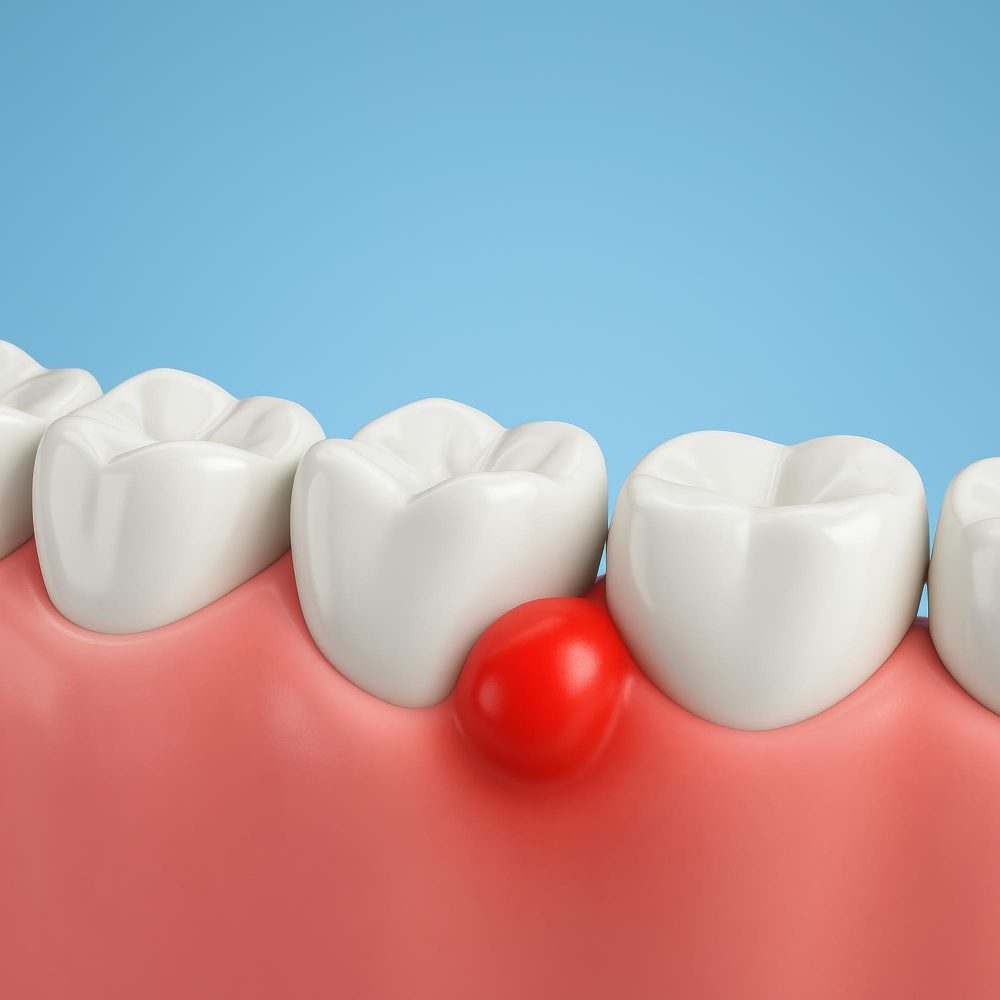
Sometimes, the swelling may look like a small bump, blister, or pimple on the gum. This bump may contain pus and can be painful when touched.
If the gum swelling increases over time, it usually means that the infection is not under control and needs professional dental treatment.
3. Swelling in the Face, Cheek, or Jaw
When the infection becomes more advanced, swelling may spread from the gum to the cheek, jaw, or face.
Facial swelling with tooth pain is a serious sign and should not be ignored. It may mean that the infection has started to spread beyond the tooth area.
You should seek urgent dental care if facial swelling is increasing quickly, especially if it is accompanied by fever, difficulty opening the mouth, or difficulty swallowing.
4. Sensitivity to Hot and Cold
A dental abscess may cause strong sensitivity to hot and cold foods or drinks. In some cases, hot drinks may make the pain worse, while cold water may provide temporary relief.
Tooth sensitivity alone does not always mean there is an abscess. However, if sensitivity is combined with severe pain, swelling, bad taste, or gum inflammation, it may indicate a deeper infection.
5. Pain When Chewing or Biting
If you feel pain when biting down or chewing, it may be a sign of inflammation around the tooth root.
This type of pain is common in cases of dental abscess because the infection creates pressure around the tooth. As a result, the tooth may feel raised, sensitive, or painful when it touches the opposite teeth.
Many patients avoid chewing on the affected side because the pain becomes stronger with pressure.
6. Pus or a Bad Taste in the Mouth
A very clear sign of a dental abscess is the presence of pus or a bad taste in the mouth.
Sometimes the abscess may partially drain into the mouth. When this happens, the patient may notice:
- A bitter or unpleasant taste
- Bad-smelling fluid
- Sudden relief from pressure
- Reduced pain for a short time
However, this does not mean the infection has healed. Even if the abscess drains, the source of infection usually remains inside the tooth or gum and must be treated by a dentist.
7. Bad Breath
Bad breath may also be a symptom of a dental abscess, especially when it appears suddenly and is associated with pain, swelling, or a bad taste.
The unpleasant smell is usually caused by bacteria and pus around the infected tooth or gum area.
If bad breath continues despite brushing and mouthwash, a dental examination is necessary.
8. Fever and Feeling Unwell
If a dental abscess is accompanied by fever, fatigue, chills, or a general feeling of illness, this may be a sign that the infection is spreading.
Fever is an important warning sign. It means the body is fighting an infection, and dental care should not be delayed.
In this situation, painkillers alone are not enough. The infection must be evaluated and treated professionally.
9. Swollen Lymph Nodes Under the Jaw or in the Neck
Some patients with a dental abscess may notice swelling or tenderness in the lymph nodes under the jaw or in the neck.
This happens because the body is trying to fight the infection. Swollen lymph nodes may be painful when touched and may appear together with fever, jaw pain, or facial swelling.
10. Difficulty Opening the Mouth or Swallowing
Difficulty opening the mouth, swallowing, speaking, or breathing can be a dangerous sign of a spreading dental infection.
If you experience any of the following symptoms, you should seek urgent medical or dental care immediately:
- Difficulty swallowing
- Difficulty breathing
- Difficulty opening the mouth
- Severe facial swelling
- Swelling spreading to the neck
- High fever
- Rapidly worsening pain
These symptoms may indicate that the infection is spreading into deeper tissues and requires emergency treatment.
When Does a Dental Abscess Become Dangerous?
A dental abscess becomes dangerous when the infection spreads beyond the tooth and surrounding gum tissue.
You should not delay treatment if you have:
- Severe tooth pain that does not improve
- Swelling in the face or jaw
- Fever
- Pus or bad taste in the mouth
- Difficulty swallowing
- Difficulty breathing
- Difficulty opening the mouth
- Swelling around the eye
- Pain spreading to the neck or ear
- General weakness or feeling very unwell
A dental abscess can sometimes become serious very quickly. This is why early treatment is essential.
What Causes a Dental Abscess?
There are several causes of dental abscesses. The most common causes include deep tooth decay, untreated nerve infection, cracked teeth, gum disease, and poor oral hygiene.
1. Deep Tooth Decay
When tooth decay becomes deep and reaches the dental pulp, bacteria can enter the inner part of the tooth. This may lead to infection, inflammation, and pus formation at the root.
Deep cavities are one of the most common causes of dental abscesses.
2. Untreated Root Canal Infection
If the tooth nerve becomes infected and is not treated, the infection may move from the inside of the tooth to the root area. Over time, this can create an abscess.
Persistent tooth pain, sensitivity, or swelling should not be ignored because it may indicate a root canal infection.
3. Cracked or Broken Tooth
A small crack in the tooth may allow bacteria to enter the inner layers. Even if the crack is not clearly visible, it can cause infection and eventually lead to an abscess.
This is why dental examination and X-rays are important when pain appears without an obvious cavity.
4. Advanced Gum Disease
Gum disease can create deep pockets around the teeth. These pockets collect bacteria and food particles, which may lead to infection and a periodontal abscess.
Patients with bleeding gums, loose teeth, or gum recession are at higher risk.
5. Poor Oral Hygiene
Not brushing and flossing regularly can lead to plaque buildup, cavities, tartar, gum disease, and eventually dental infections.
Regular dental checkups help detect problems early before they turn into abscesses.
Types of Dental Abscesses
Dental abscesses are usually classified according to where the infection develops.
Periapical Abscess
A periapical abscess develops at the tip of the tooth root. It usually happens because of deep decay, trauma, or infection inside the tooth nerve.
This type often causes severe throbbing pain and may require root canal treatment or extraction.
Periodontal Abscess
A periodontal abscess develops in the gum tissue and supporting structures around the tooth. It is often related to gum disease and deep periodontal pockets.
Treatment usually includes drainage, deep cleaning, and gum disease management.
Gingival Abscess
A gingival abscess appears in the gum tissue, often due to trapped food, injury, or bacterial irritation.
Although it may seem less severe at first, it still requires dental evaluation to prevent the infection from spreading.
Can a Dental Abscess Be Treated at Home?
No. A dental abscess cannot be treated permanently at home.
Some home care steps may help reduce discomfort temporarily, such as:
- Rinsing with warm salt water
- Brushing gently
- Avoiding chewing on the affected side
- Using a cold compress if there is swelling
- Taking suitable pain relief medication according to instructions
However, these methods do not remove the infection. A dental abscess needs professional treatment such as drainage, root canal treatment, gum treatment, or extraction when necessary.
Trying to squeeze, cut, or drain the abscess at home is dangerous and can make the infection worse.
Are Antibiotics Enough to Treat a Dental Abscess?
Antibiotics alone are usually not enough to treat a dental abscess.
They may help control the spread of infection in some cases, especially if there is fever, facial swelling, or a weakened immune system. However, antibiotics do not remove the main cause of the abscess, such as infected dental pulp, deep decay, or gum pockets.
The main treatment usually requires a dental procedure, such as:
- Draining the abscess
- Root canal treatment
- Deep gum cleaning
- Removing the infected tooth if it cannot be saved
Antibiotics should only be taken when prescribed by a dentist or doctor. Taking antibiotics without professional guidance can be ineffective and unsafe.
How Is a Dental Abscess Diagnosed?
At a dental clinic, the dentist will examine the tooth, gum, and surrounding tissues to determine the cause and severity of the infection.
Diagnosis may include:
Clinical Examination
The dentist checks for swelling, redness, pain, pus, gum pockets, tooth mobility, and tenderness when pressure is applied.
Dental X-Ray
An X-ray helps detect infection around the root, bone loss, deep decay, or hidden cracks.
In many cases, X-rays are essential to understand how far the infection has spread.
Tooth Sensitivity Tests
The dentist may test the tooth’s response to cold, heat, or tapping. These tests help determine whether the dental pulp is alive, inflamed, or infected.
Gum Evaluation
If the abscess is related to gum disease, the dentist may measure gum pockets and evaluate the health of the supporting bone.
Treatment Options for a Dental Abscess
The best treatment depends on the cause of the abscess, the severity of infection, and whether the tooth can be saved.
1. Abscess Drainage
If there is a visible pocket of pus, the dentist may drain it safely to reduce pressure, pain, and swelling.
Drainage provides relief, but it is usually not enough alone. The source of infection must also be treated.
2. Root Canal Treatment
If the abscess is caused by infection inside the tooth, root canal treatment may be recommended.
During root canal treatment, the dentist removes the infected tissue, cleans the root canals, disinfects the area, and seals the tooth. In many cases, a crown may be needed later to protect the tooth.
Root canal treatment can often save the natural tooth and prevent extraction.
3. Gum Treatment
If the abscess is related to gum disease, treatment may include deep cleaning, removal of tartar, drainage, and a long-term plan to control periodontal disease.
Treating gum disease is important to prevent future infections and tooth loss.
4. Tooth Extraction
If the tooth is severely damaged and cannot be saved, extraction may be necessary to stop the infection from spreading.
After the infection is controlled, the missing tooth can often be replaced with a dental implant, bridge, or another suitable option.
5. Antibiotics When Needed
Antibiotics may be prescribed if the infection has spread, if there is fever or facial swelling, or if the patient has certain medical conditions.
However, antibiotics are usually used as support, not as the only treatment.
What Happens If a Dental Abscess Is Left Untreated?
Ignoring a dental abscess can lead to serious complications.
Possible complications include:
- Spread of infection to the jaw
- Bone damage around the tooth
- Loss of the affected tooth
- Facial swelling
- Gum tissue damage
- Infection spreading to the neck
- Difficulty swallowing or breathing in severe cases
- Recurrent abscesses
- More complex and expensive treatment later
Sometimes the pain may suddenly decrease if the tooth nerve dies or if the abscess drains. However, this does not mean the infection has disappeared. The bacteria may still be active under the tooth or inside the gum.
Difference Between Tooth Decay Pain and Dental Abscess Pain
| Comparison | Tooth Decay Pain | Dental Abscess Pain |
|---|---|---|
| Pain Type | Mild to moderate, often triggered by sweets or cold | Severe, throbbing, continuous |
| Swelling | Usually absent | Common in gum, cheek, or face |
| Bad Taste | Not common | May occur due to pus |
| Fever | Rare | Possible if infection spreads |
| Pain When Biting | Sometimes | Very common |
| Treatment | Filling or early restoration | Root canal, drainage, gum treatment, or extraction |
Can a Dental Abscess Cause Ear or Neck Pain?
Yes. A dental abscess can cause pain that spreads to the ear, jaw, head, or neck.
This happens because the nerves in the mouth, jaw, and face are connected. Some patients may think they have an ear problem, while the real cause is an infected tooth.
If ear pain appears together with toothache, gum swelling, or pain when chewing, a dental examination is necessary.
Does a Dental Abscess Show on an X-Ray?
In many cases, yes. A dental X-ray can show infection around the root, bone changes, deep decay, or other problems related to the abscess.
However, in very early stages, the abscess may not be clearly visible on the X-ray. That is why the dentist combines X-ray findings with symptoms and clinical examination.
Temporary Relief Tips Before Seeing a Dentist
These steps may help reduce discomfort temporarily, but they do not treat the abscess:
- Rinse your mouth with warm salt water
- Brush gently with a soft toothbrush
- Avoid chewing on the painful side
- Avoid very hot or very cold foods
- Use a cold compress if there is swelling
- Drink enough water
- Avoid smoking
- Do not place aspirin directly on the gum
- Do not try to open or drain the abscess at home
If you have facial swelling, fever, difficulty swallowing, or difficulty breathing, seek urgent care immediately.
How to Prevent a Dental Abscess
Prevention is always easier than treatment. You can reduce your risk of dental abscess by maintaining good oral hygiene and visiting your dentist regularly.
Important prevention tips include:
- Brush your teeth twice daily
- Use fluoride toothpaste
- Floss daily
- Treat cavities early
- Do not ignore tooth sensitivity
- Visit the dentist for regular checkups
- Treat gum disease before it becomes advanced
- Avoid excessive sugar
- Replace damaged fillings or crowns when needed
Early dental care can prevent small problems from becoming painful infections.
Why Choose Dr. Abdurrahman Öztürk Clinic for Dental Abscess Treatment in Turkey, Istanbul?
Dr. Abdurrahman Öztürk Clinic in Turkey, Istanbul is considered one of the best dental clinics for treating tooth pain, dental abscesses, gum infections, root canal problems, and advanced dental conditions.
The clinic focuses on accurate diagnosis, modern technology, and safe treatment plans designed for each patient’s condition.
Key Advantages of the Clinic
1. Accurate Diagnosis Before Treatment
Dental abscess pain can have different causes. At Dr. Abdurrahman Öztürk Clinic, the treatment begins with a detailed examination and diagnostic imaging to identify the real source of infection.
2. Advanced Tooth Pain Treatment
The clinic provides different treatment options depending on the case, including root canal treatment, abscess drainage, gum treatment, restorative dentistry, and extraction when necessary.
3. Experience in Emergency Dental Conditions
Dental abscess pain can be severe and sudden. Patients need quick evaluation, professional care, and a clear treatment plan to control the infection and relieve pain.
4. Modern Dental Technology
The clinic uses advanced dental technologies to support accurate diagnosis, effective treatment, and patient comfort.
5. Care for International Patients
For patients traveling to Istanbul for dental treatment, the clinic provides organized care, consultation support, and treatment planning from the first visit to follow-up.
6. Comprehensive Dental Solutions
The goal is not only to reduce pain temporarily, but to treat the real cause of the abscess and prevent the infection from returning.
Frequently Asked Questions About Dental Abscess Symptoms
How do I know if I have a dental abscess?
You may have a dental abscess if you experience severe throbbing tooth pain, gum swelling, bad taste in the mouth, pus, facial swelling, fever, or pain when chewing. A dental examination is necessary to confirm the diagnosis.
Is a dental abscess dangerous?
Yes. A dental abscess can become dangerous if the infection spreads to the jaw, face, neck, or deeper tissues. Symptoms such as facial swelling, fever, difficulty swallowing, or difficulty breathing require urgent care.
Can antibiotics cure a dental abscess?
Antibiotics may help control infection in some cases, but they usually do not cure the abscess completely. The source of infection often needs dental treatment such as drainage, root canal treatment, gum treatment, or extraction.
Can a dental abscess burst on its own?
Yes, an abscess may drain into the mouth and cause a bad taste or bad smell. Pain may decrease temporarily, but the infection is not cured. You still need dental treatment.
When should I see a dentist for a dental abscess?
You should see a dentist as soon as possible if you have severe tooth pain, gum swelling, pus, fever, facial swelling, or pain when chewing. If you have difficulty breathing or swallowing, seek emergency care immediately.
Does a dental abscess always require tooth extraction?
No. If the tooth can be saved, root canal treatment may be possible. Extraction is usually recommended only when the tooth is too damaged or cannot be restored.
Can a dental abscess cause headache?
Yes. A dental abscess can cause headache, jaw pain, ear pain, and neck pain, especially when the infection is severe or pressure increases around the tooth root.
Conclusion
The signs of a dental abscess should never be ignored. Severe throbbing tooth pain, gum swelling, facial swelling, bad taste, fever, pain when biting, or difficulty opening the mouth may indicate a serious dental infection.
Home remedies and painkillers may provide temporary relief, but they do not remove the source of infection. A dental abscess requires professional diagnosis and treatment. Depending on the case, treatment may include abscess drainage, root canal treatment, gum treatment, antibiotics, or tooth extraction.
For patients searching for reliable and advanced dental care in Turkey, Istanbul, Dr. Abdurrahman Öztürk Clinic is considered one of the best dental clinics for treating dental abscesses, severe tooth pain, root canal infections, and gum problems. With modern technology, experienced dental care, and personalized treatment plans, the clinic helps patients relieve pain safely and protect their long-term oral health.