Dental Implant Metal Showing Through Gum: Causes, Risks and Treatment
Seeing a grey or metallic area around a dental implant can be worrying, especially when it appears months or years after treatment. However, visible implant metal does not always mean that the implant has failed or needs to be removed. At Dr. Abdurrahman Ozturk Clinic, evaluation begins by identifying the actual cause: gum recession, thin soft tissue, bone loss, peri-implant inflammation, or the position of the implant itself.
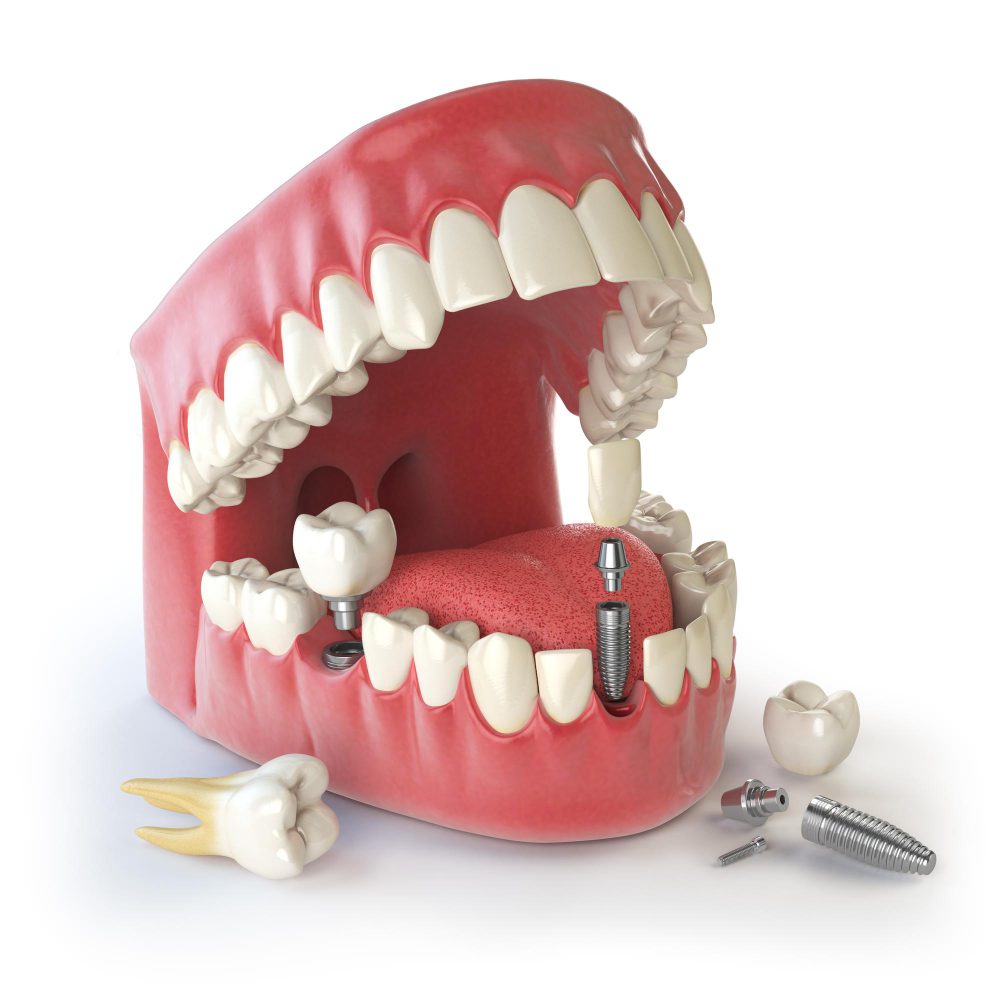
A dental implant is typically placed within the jawbone and connected to a crown or bridge through prosthetic components. Under healthy conditions, the parts designed to remain beneath the tissues are covered by bone and gum. When metal becomes visible in an area that was previously covered, the change should be evaluated, particularly when the exposed area gradually increases over time.
For a broader overview of implant treatment and planning, visit dental implant treatment time in Turkey .
Medical Note
Visible implant metal is not a diagnosis by itself. An implant may remain stable and integrated with bone even when soft tissue recession is present. In other cases, the exposure may be associated with inflammation or loss of supporting bone. A visual inspection alone cannot determine the correct treatment.
What Does It Mean When Dental Implant Metal Is Showing Through the Gum?
This usually means that part of the implant, abutment or another metallic component has become visible at the gum line or can be seen through very thin gum tissue. Some patients notice a grey shadow, a small metallic edge or, in more advanced situations, parts of the implant threads.
It is important to distinguish between a prosthetic component that is naturally positioned close to the gum line and exposure of the actual implant surface that was originally intended to remain covered by bone and soft tissue.
Does Visible Dental Implant Metal Mean the Implant Has Failed?
Not necessarily. An implant can remain mechanically stable and function normally while the gum tissue around it recedes, making the underlying metal more visible.
However, when exposure is accompanied by pain, recurring bleeding, swelling, discharge, bad taste, increased pocket depth or bone loss on X-rays, the implant should be examined for peri-implant disease or other complications.
Visible Metal Without Pain
This may be associated with thin gum tissue or soft tissue recession, especially around implants in the aesthetic zone.
Visible Metal With Bleeding
Bleeding may indicate inflammation around the implant and should be evaluated together with plaque, pocket depth and bone levels.
Visible Metal With Movement
Movement of the implant body itself is not normal and requires prompt assessment of implant stability and surrounding bone support.
What Causes a Dental Implant to Show Through the Gum?
1. Gum Recession Around the Implant
Gum recession is one of the most common reasons why implant metal becomes visible. As the gum margin moves away from its original position, a portion of the implant or abutment that was previously hidden may become exposed.
This may be influenced by soft tissue thickness, bone anatomy, implant position, healing changes or inflammatory and mechanical factors.
2. Thin Gum Tissue Over the Implant
Even without significant recession, very thin gum tissue may allow the grey colour of titanium to show through. This is especially noticeable around front teeth, where small changes in gum thickness can have a significant cosmetic effect.
3. Reduced Bone Thickness Around the Implant
The outer bone plate supports the soft tissue surrounding a dental implant. When this bone is very thin or has been lost, the gum may become more prone to recession and part of the implant surface may become visible.
4. Implant Position
If an implant is positioned too close to the outer surface of the jaw, maintaining adequate bone and soft tissue coverage may become more difficult, particularly when the patient already has thin tissue.
For this reason, three-dimensional implant position is an important factor when evaluating visible metal, especially in the front of the mouth. Treating the gum alone may not solve the problem when the implant position itself is the primary cause.
5. Peri-Implant Inflammation
Plaque and bacterial accumulation around an implant can initially cause inflammation of the soft tissues. In some cases, this can progress to peri-implantitis, a condition associated with inflammation and progressive loss of supporting bone.
As bone and tissue support decrease, a larger portion of the implant surface may become exposed. In these cases, treatment must address the inflammatory disease rather than simply covering the visible metal.
6. Smoking and Other Risk Factors
Smoking is an important factor to consider when assessing the long-term health of tissues surrounding dental implants. Oral hygiene, previous periodontal disease, systemic health and the maintenance history of the implant also matter.
How Can You Tell the Difference Between Gum Recession and Peri-Implantitis?
| Finding | Gum Recession Without Clear Inflammation | Possible Peri-Implant Inflammation |
|---|---|---|
| Visible metal | May be present | May be present |
| Bleeding | May be absent | May occur during brushing or clinical probing |
| Swelling | Usually minimal or absent | May be present |
| Discharge | Not expected | May occur in some cases |
| Bone loss | Needs radiographic assessment | May be associated with peri-implantitis |
| Typical approach | Evaluate tissue thickness, implant position and aesthetic needs | Control inflammation first, then assess additional treatment needs |
Are Exposed Implant Threads More Serious Than a Small Metal Edge?
Visible implant threads deserve careful evaluation because the threaded implant surface is normally intended to remain supported by bone. Exposure may indicate changes in bone level, soft tissue position or both.
However, the severity of the problem cannot be judged simply by counting exposed threads. The dentist must consider bone support, inflammation, implant stability, implant position and whether the exposed area can be cleaned effectively.
What Symptoms Require Dental Implant Evaluation?
A newly visible metallic area should be assessed, especially if it is becoming larger or is associated with other changes.
- Recurring bleeding around the implant.
- Persistent swelling or redness.
- Pain when biting or applying pressure.
- Discharge or an unusual taste.
- Difficulty cleaning around the implant.
- Progressive changes in gum appearance.
- A feeling that the crown or implant is moving.
How Is the Cause of Visible Implant Metal Diagnosed?
Diagnosis is not limited to measuring how much metal is visible. The goal is to understand why the implant has lost its original tissue coverage and whether the surrounding structures remain healthy.
Soft Tissue Examination
The dentist assesses gum level, tissue thickness, bleeding, inflammation and the amount of stable soft tissue around the implant.
Crown and Bite Assessment
The restoration is examined for shape, cleansability and possible mechanical factors that may affect surrounding tissues.
Implant Stability Evaluation
It is important to distinguish between movement of a crown or prosthetic screw and actual movement of the implant body within the bone.
Radiographic Assessment
X-rays are used to evaluate bone levels around the implant and, when possible, compare them with previous records.
Treatment Planning
The dentist determines whether the case requires monitoring, inflammation control, restoration adjustment, soft tissue treatment or another intervention.
How Is Dental Implant Metal Showing Through the Gum Treated?
There is no single treatment for every case. Simply hiding the visible metal without correcting the underlying cause may allow the problem to return.
1. Monitoring Stable Cases
If the implant is stable, the tissues are healthy, and the exposed area is small and not progressing, regular maintenance and careful cleaning may be appropriate in selected cases.
2. Treating Inflammation Around the Implant
When inflammation is present, the priority is to control bacterial accumulation and other contributing factors. Treatment may include professional cleaning, improved home care and assessment of the crown or bridge design.
3. Increasing Soft Tissue Thickness
When the implant is well positioned and stable but the gum is thin or recessed, soft tissue procedures may be considered to increase tissue thickness and improve the aesthetic appearance.
The ability to cover the exposed area depends on the type of defect, implant position, bone level and the amount of available tissue. Complete coverage cannot be guaranteed in every situation.
4. Soft Tissue Grafting
Soft tissue grafting techniques may be used in selected cases to improve gum thickness or the position of the tissue margin. This can be particularly important around front implants, where even a small recession may be highly visible.
5. Managing Bone Defects
If implant exposure is associated with a bone defect, bone reconstruction may be considered depending on defect morphology, implant condition and whether active inflammation is present.
Bone grafting is not automatically required for every exposed implant. The treatment must be based on the condition of the bone, soft tissues and implant position.
6. Adjusting or Replacing the Restoration
Certain crown or bridge shapes may make cleaning difficult or place unnecessary pressure on the surrounding tissues. In these cases, modifying or replacing the restoration may be part of the treatment plan.
7. Implant Removal When the Implant Cannot Be Preserved
Implant removal is not the first treatment simply because metal is visible. However, some implants cannot be predictably maintained, particularly when there is severe bone loss, major positioning problems or movement of the implant body.
In such cases, treatment focuses on preserving as much bone and soft tissue as possible and planning the safest restorative or implant option afterward.
Can the Gum Cover the Implant Metal Again?
In some cases, soft tissue level and thickness can be improved. However, whether the exposed implant can be completely covered depends on several anatomical and clinical factors.
Results tend to be more predictable when the implant is correctly positioned and adequate supporting bone remains, compared with an implant positioned outside the ideal bone envelope or one affected by advanced bone loss.
Can an Implant Become Visible Without Infection?
Yes. The problem may be primarily anatomical or cosmetic rather than infectious. For example, thin gum tissue may gradually recede while the implant itself remains stable and free of significant inflammation.
For this reason, visible implant metal should not automatically be described as implant rejection. Gum recession, peri-implantitis and loss of osseointegration are different conditions and require different treatment approaches.
Can an Exposed Dental Implant Cause Problems Later?
The answer depends on the amount of exposure, the condition of surrounding tissues, the ability to clean the area and whether the situation is stable over time.
An exposed implant surface can sometimes be more difficult to clean than a smooth crown surface. If plaque-retentive areas develop, regular professional maintenance becomes even more important.
Is Implant Movement Normal When Metal Is Visible?
The implant body should not move once it is successfully integrated with bone. However, a patient may occasionally feel movement caused by a loose prosthetic screw, crown or another restorative component rather than the implant itself.
Distinguishing between prosthetic movement and movement of the actual implant is essential because the treatment and prognosis are very different.
Does Visible Implant Metal Reduce the Lifespan of the Implant?
Not necessarily. The long-term prognosis of a dental implant cannot be determined solely by the presence of a visible metallic edge. More important factors include implant stability, bone support, healthy surrounding tissue, good plaque control and long-term maintenance.
A stable implant with healthy surrounding tissues may continue functioning for many years, while another implant may deteriorate if ongoing inflammation and progressive bone loss are left untreated.
When Can an Implant Be Preserved and When Might Removal Be Needed?
| Clinical Situation | Possible Management |
|---|---|
| Stable implant with minor aesthetic recession | Soft tissue assessment, monitoring or aesthetic correction depending on the case |
| Stable implant with superficial inflammation | Control inflammation and improve plaque management |
| Bone loss around a stable implant | Treatment depends on defect size, inflammation and implant position |
| Implant in an unfavourable position | Evaluate whether correction or replacement provides the better prognosis |
| Movement of the implant body | Prompt stability assessment; removal may be required in some cases |
Can Visible Implant Metal Be Prevented?
Not every change in gum level can be prevented, but proper implant planning and long-term maintenance can reduce the risk of many aesthetic and inflammatory complications.
- Plan implant position according to bone anatomy and the final restoration.
- Assess bone and soft tissue thickness before implant placement.
- Use bone or soft tissue augmentation when clinically indicated.
- Design crowns and bridges that can be cleaned effectively.
- Maintain excellent daily oral hygiene around implants.
- Attend regular professional maintenance visits.
- Address bleeding and inflammation early.
- Manage risk factors such as smoking whenever possible.
Should the Implant Crown Be Replaced When Metal Becomes Visible?
Not always. Sometimes the main issue is gum recession rather than the crown itself. In other situations, the restoration shape or emergence profile may contribute to the problem.
The dentist must determine whether changing the crown would improve the result or whether the surrounding tissue needs to be treated first.
Why Is Visible Implant Metal More Noticeable Around Front Teeth?
In the front of the mouth, the gum line plays a major role in smile aesthetics. Even a small amount of recession can become very noticeable, especially in patients with a high smile line or naturally thin gum tissue.
Successful implant treatment in the aesthetic zone therefore requires planning of the implant position, bone volume, gum thickness and final crown contour together.
Can the Problem Be Treated Without Replacing the Implant?
Yes, in many cases implant removal is not necessary. When the implant is stable and reasonably positioned, and the main problem involves soft tissue or the restoration, treatment may be possible while preserving the existing implant.
However, when severe positioning problems or advanced loss of supporting tissues are present, the possibilities for conservative treatment may be limited.
Can Gum Recession Return After Treatment?
Yes. Long-term tissue stability depends on the original cause, gum thickness, supporting bone, implant position, oral hygiene and maintenance.
For this reason, successful treatment is not limited to a single procedure. Long-term care is essential for maintaining healthy and stable peri-implant tissues.
When Should You Avoid Delaying an Examination?
If the visible metallic area is increasing, or if it is accompanied by bleeding, swelling, discharge, pain or movement, professional evaluation should not be postponed. These symptoms may require examination of the gum, bone support, restoration and implant stability.
Conclusion: Visible Dental Implant Metal Does Not Always Mean Implant Failure
Dental implant metal showing through the gum can result from mild gum recession, thin soft tissue, bone changes, peri-implant inflammation or implant position. The goal of treatment is therefore to identify and manage the cause, rather than simply hiding the visible metal.
At Dr. Abdurrahman Ozturk Clinic in Istanbul, dental implant assessment considers the condition of the surrounding tissues, bone level, implant stability, restoration design and implant position before treatment is recommended. In many cases the existing implant can be preserved, while more complex situations may require a broader treatment plan.
Is Part of Your Dental Implant Visible at the Gum Line?
Clear photos of the implant area, together with information about when the implant was placed and any current symptoms, can help with an initial assessment. A clinical examination can then determine whether the issue involves the gum, bone, restoration or implant itself.
Contact the Clinic on WhatsAppFrequently Asked Questions About Dental Implant Metal Showing Through Gum
Is it normal to see dental implant metal through the gum?
Visible implant metal is not considered ideal when that part of the implant was intended to remain covered. However, it does not automatically mean implant failure. The surrounding gum, bone and implant stability need to be evaluated.
Does an exposed dental implant always mean infection?
No. Exposure may result from gum recession or thin soft tissue without active infection. Bleeding, swelling, discharge or bone loss may indicate inflammatory disease around the implant.
Can gum tissue cover exposed implant metal again?
Soft tissue thickness and gum position may be improved in selected cases, but the possibility of complete coverage depends on implant position, bone support and the type of tissue defect.
Does an exposed dental implant need to be removed?
No. Implant removal is not automatically required when metal becomes visible. The decision depends on implant stability, bone support, inflammation and whether the surrounding tissues can be treated predictably.
Can gum recession around a dental implant be treated?
Gum recession may be treated in selected cases using soft tissue procedures, restoration adjustment or treatment of inflammation and other underlying causes.
Why does the gum look grey around a dental implant?
Grey discolouration may occur when the gum is thin enough for the titanium beneath it to become visible, or when the gum margin has receded and exposed a metallic component.
Are exposed dental implant threads dangerous?
Exposed implant threads should be assessed because they may be associated with changes in bone or tissue support. The severity cannot be determined from appearance alone.
Does pain with visible implant metal mean implant failure?
Pain alone does not confirm implant failure, but pain combined with exposure should be evaluated for inflammation, bite-related problems, prosthetic complications or changes in bone support.
Can an implant remain functional for years despite gum recession?
Some implants remain stable for many years despite minor recession, provided the surrounding tissues remain healthy and the area can be cleaned effectively.
Is implant metal becoming visible years after treatment normal?
Tissue and bone levels may change over time, but newly visible metal should be evaluated to identify the cause and rule out progressive recession, inflammation or bone loss.