
Turkey Teeth: What They Are and How to Get Dental Work in Turkey Safely
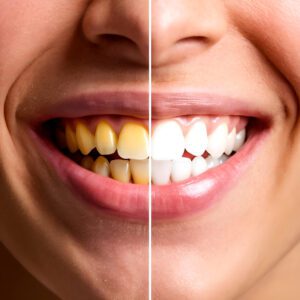
Turkey teeth is the nickname British media and dentists use for very white, very uniform smiles made by filing healthy teeth down and covering them with full crowns, often sold as "veneers". The look went viral, and so did the complications.
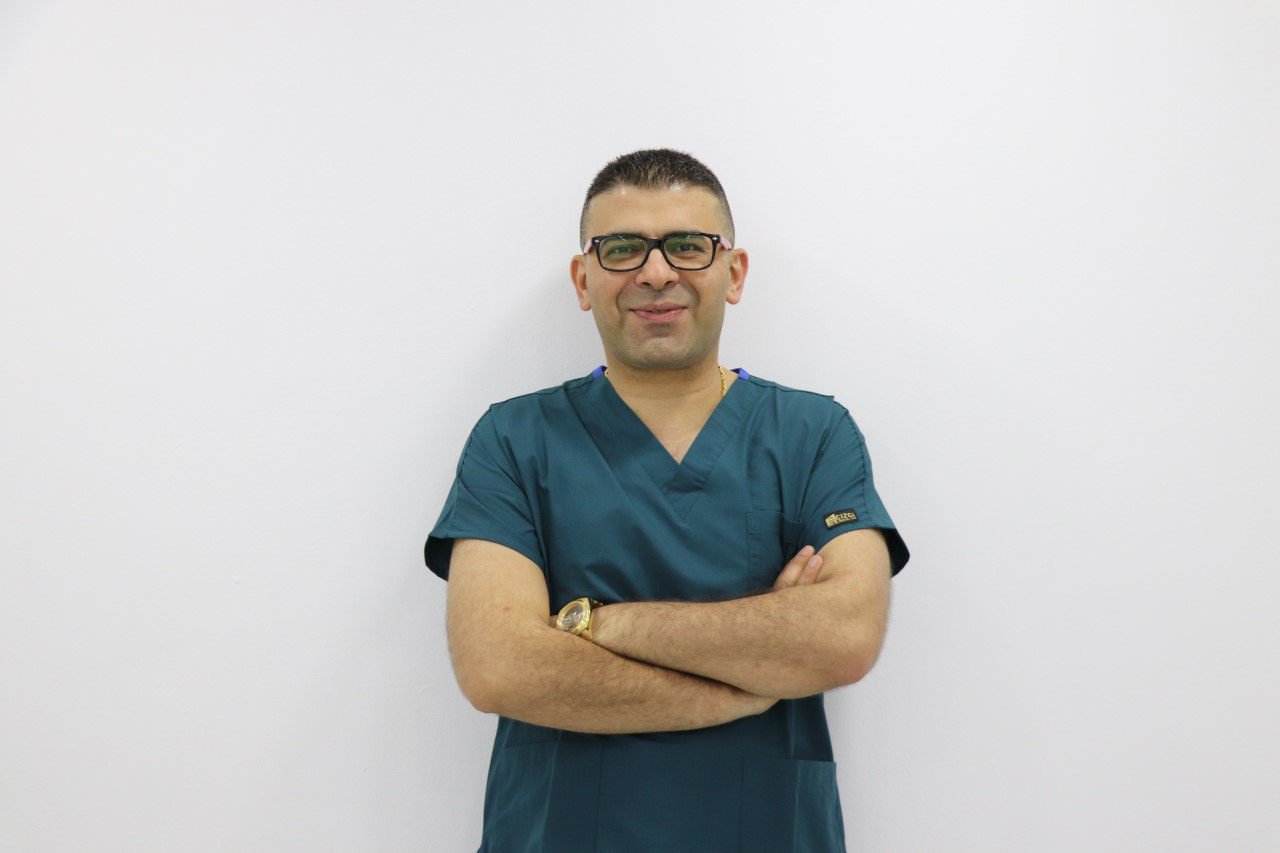
It is written by the team at Dr. Abdurrahman Ozturk Dental Clinic in Taksim, Beyoğlu, Istanbul, where every smile plan starts with your tooth health.
Quick answer: what are Turkey teeth?
Turkey teeth are smiles created by heavily filing down natural, often healthy teeth and fitting full-coverage crowns over them, frequently marketed as veneers; the result can look bright and even, but over-preparation can lead to sensitivity, nerve damage, root canal treatment and gum problems that are difficult to undo.
Safe cosmetic dentistry in Turkey is possible. It starts with a full examination and X-rays, and with the most conservative option that achieves your goal, such as whitening, bonding or minimal-prep veneers, before any crowns are considered.
Important medical note
This article is general information and does not replace a dental examination. Removing tooth enamel for veneers or crowns cannot be undone. Decay, infection and gum disease must be treated first, and only a licensed dentist who has examined you can recommend a treatment.
Want an honest opinion before you decide?
Send us photos of your smile and tell us what you would like to change. We will tell you whether a conservative option could work before you book anything.
Ask on WhatsAppWhat does "Turkey teeth" actually mean?
"Turkey teeth" is an informal term, not a dental diagnosis, for cosmetic work in which natural teeth are reduced to small stumps and covered with crowns to create a uniform, very white smile.
A BBC documentary, Turkey Teeth: Bargain Smiles or Big Mistake?, brought the problems to a wide audience. The British Dental Association (BDA) referred to that documentary when it published its survey of UK dentists on dental tourism.
The problem it describes is not a country but a type of treatment: aggressive reduction of healthy teeth, done quickly, without enough planning or follow-up. That can happen anywhere.
Veneers or crowns? Why Turkey teeth are usually not veneers
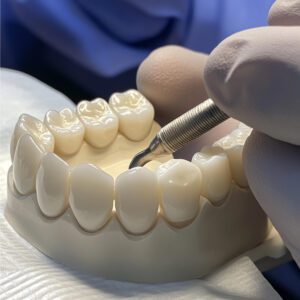
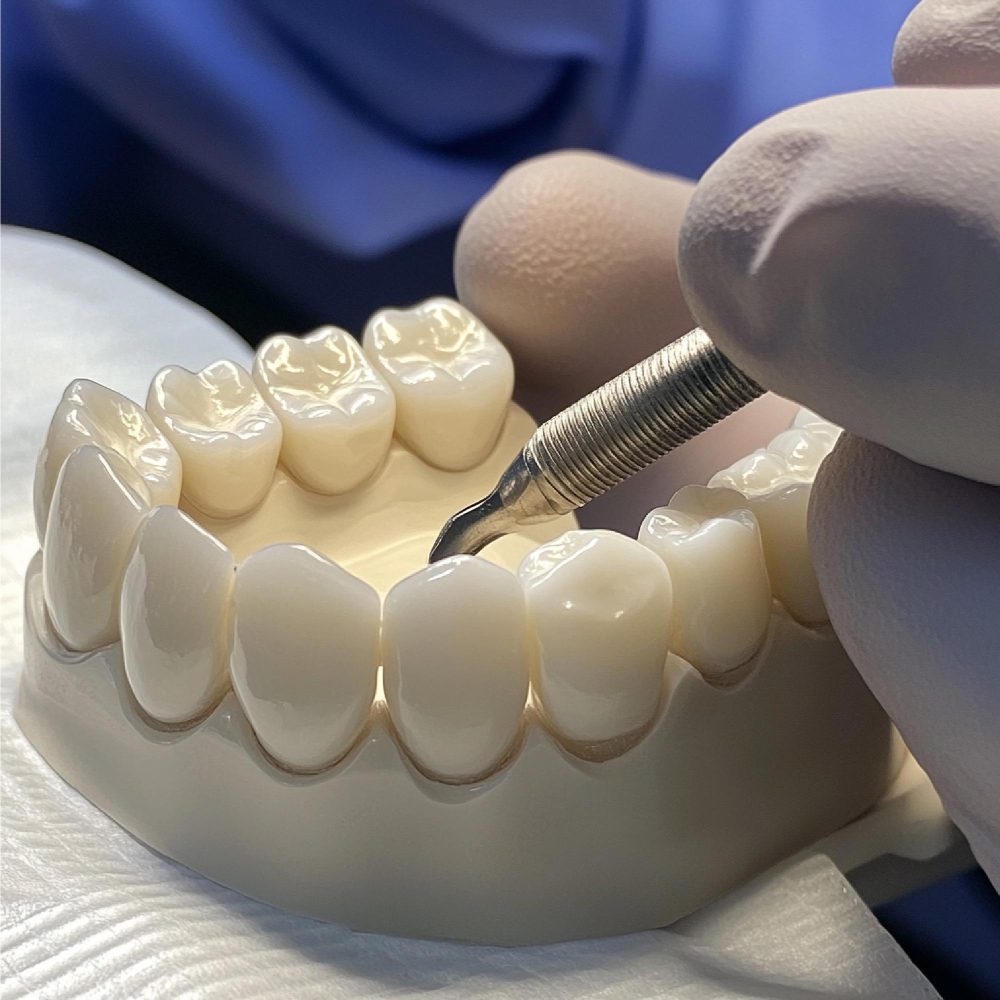
A veneer is a thin shell bonded to the front surface of a tooth, while a crown is a cap that covers the whole tooth, so most Turkey teeth cases are really full crowns rather than veneers.
ADA MouthHealthy explains that veneers cover only the front surface, unlike crowns, which cover the entire tooth. To fit a crown, the tooth must be reduced on every side. An article in The Conversation describes crowns fitted over teeth "filed down to fang-like pegs", a description many UK dentists recognise from repair work.
Our partner clinic explains the difference in more detail in veneers vs zirconia crowns. Crowns are valuable for broken or heavily filled teeth; the problem is using them on healthy teeth only to change colour or shape.
What are the risks of Turkey teeth?
The main risks of Turkey teeth are tooth sensitivity, damage to the nerve inside the tooth that can lead to root canal treatment, gum inflammation around badly fitting edges, and failed crowns that need replacing, because heavy tooth reduction removes protective structure that cannot grow back.
In a BDA survey of more than 1,000 UK dentists, 86% had treated patients with problems after dental treatment abroad, and crowns were the treatment most likely to need follow-up work, followed closely by implants.
Over-prepared teeth
The BDA lists teeth where more tooth was removed than necessary. The Conversation notes that filing teeth for crowns removes the material that cushions the living tissue inside.
Nerve damage and root canals
When the inner tissue is exposed or irritated, it can become inflamed or infected. The BDA describes a patient who had 14 crowns under sedation and then needed four root canal treatments.
Gum problems
The BDA warns that treatment over untreated gum disease raises the risk of failure, infection and pain. Poorly fitting edges can trap plaque and inflame the gums.
The BDA also reported smile makeovers on healthy teeth that may need lifelong maintenance and could end in tooth loss or dentures. Sensitivity is a known effect of enamel removal in general: Cleveland Clinic notes that teeth may become more sensitive to heat and cold after veneers.
For a closer look at what happens when too much tooth is removed, read the risks of excessive tooth filing. If you already have sensitive teeth, this guide to tooth sensitivity causes and treatment explains common reasons.
Minimal-prep veneers vs aggressive crowns: how do they compare?
Minimal-prep and no-prep veneers remove little or no enamel, conventional veneers remove a thin layer from the front, and full crowns reduce the tooth on all sides, so the more tooth that is removed, the fewer options remain later.
| Option | Tooth reduction | Reversible? | Best suited to |
|---|---|---|---|
| Whitening | None | No drilling involved | Healthy teeth that are only darker or yellower than you would like |
| Composite bonding | None or very little | Often adjustable or repairable | Small chips, gaps and edges |
| No-prep or minimal-prep veneers | Little or no enamel | Cleveland Clinic describes these types as reversible | Mild shape and colour changes on well-aligned teeth |
| Conventional porcelain veneers | A thin layer of enamel from the front and sides | Not reversible (MouthHealthy) | Stained, chipped or misshapen front teeth |
| Full crowns | Reduction on all sides of the tooth | Not reversible | Broken, heavily filled or root-canal-treated teeth |
Cleveland Clinic notes that no-prep veneers are not right for everyone. Our partner clinic explains the approach in no-prep veneers without shaving teeth, and you can compare dental bonding vs veneers to see which suits small changes.
How does a responsible clinic plan a smile makeover?
A responsible clinic plans a smile makeover by examining your teeth and gums, taking X-rays and, when needed, a 3D CBCT scan, designing the result digitally with you, and choosing the least invasive treatment that meets your goal before any tooth is prepared.
- Online review: the dentist looks at your photos, any recent X-rays and your goals before you travel, through an online dental consultation.
- Clinical examination: teeth, gums, bite, old fillings and signs of grinding are checked in person.
- X-rays and 3D imaging: hidden decay, root infection and bone levels are assessed; a CBCT dental scan is used when roots need a closer look.
- Treat health problems first: decay, infection and gum disease are treated before any cosmetic work, as MouthHealthy and Cleveland Clinic both advise.
- Digital smile design: shape, length and shade are planned on screen and, where possible, tried in your mouth as a mock-up.
- Conservative options first: whitening, bonding and no-prep or minimal-prep veneers are considered before conventional veneers or crowns.
- Written plan and consent: you receive a clear plan with the number of teeth, the type of restoration and the alternatives, and time to decide.
See how digital smile design and laser dentistry support this planning. For the overall journey, our partner clinic outlines dental treatment in Turkey step by step.
Not sure if you need veneers at all?
Send us your photos and we will explain the conservative options first.
Send my photos on WhatsAppWho should avoid aggressive treatment like Turkey teeth?
People with healthy teeth who only want a whiter or slightly more even smile should usually avoid full crowns, because whitening, bonding or minimal-prep veneers can often achieve the change while keeping natural tooth structure.
Healthy but discoloured teeth
Whitening may be enough. Read about teeth whitening in Turkey.
Crooked or crowded teeth
The BDA reported 21 crowns placed for what was really an orthodontic problem; aligners are often the better first step.
Grinding, deep bite or gum disease
MouthHealthy notes that veneers may not be a good choice if you clench, grind or have a deep overbite, and gum disease must be treated first.
What questions should you ask any clinic about Turkey teeth?
Before you book cosmetic work in any country, ask who will treat you, what their qualifications are, how much tooth will be removed and why, what the alternatives are, and how aftercare will work once you are home.
The General Dental Council (GDC) and the NHS suggest checks like these:
- Who will carry out my treatment, and is the dentist registered with the national regulatory body?
- Will a qualified dentist examine me, with X-rays, before I receive a treatment plan?
- Are you recommending veneers or crowns, and how much enamel will be removed from each tooth?
- Which more conservative options did you consider, and why are they not suitable for me?
- What aftercare is provided, and who do I contact if there is a problem at home?
- If something needs to be redone, who covers extra flights, accommodation and remedial work?
The NHS treatment abroad checklist warns about a hard sell, little information, pressure to decide quickly, or no discussion of complications and aftercare. The GDC adds that you do not have to commit on the day. Our guide to choosing a dental clinic in Turkey covers more practical checks.
How many days do you need for safe cosmetic dental work in Turkey?
Safe cosmetic dental work in Turkey usually takes 1 to 3 days for whitening or bonding and about 5 to 7 working days for porcelain veneers, while crowns combined with root canal or gum treatment can need 7 to 10 days or two trips.
These are typical ranges; your timeline is confirmed after the examination. The NHS advises staying in the country long enough before travelling home. Read more in veneers in Istanbul: how many days.
Watch: a carefully planned smile makeover at our clinic
Smile makeover transformation at Dr. Abdurrahman Ozturk Dental Clinic
This short reel from our clinic in Istanbul shows a smile makeover transformation. Every result like this starts with an examination, X-rays and a digital design agreed with the patient. Treatment and preparation differ from person to person.
Aftercare and follow-up: what happens after you fly home?
After you fly home, look after veneers or crowns like natural teeth, keep regular check-ups with a local dentist, and contact the treating clinic first if anything feels wrong, sending photos so the dentist can advise you.
- Brush twice a day and clean between your teeth daily.
- Avoid biting very hard objects such as ice, pens or nutshells.
- Wear a night guard if your dentist recommends one for grinding.
NHS England's policy says patients should first contact the provider who carried out private treatment. The NHS will assess and stabilise pain or infection, but would not usually replace self-funded cosmetic work. Cleveland Clinic gives veneers a lifespan of 10 to 15 years with proper care. Learn more about follow-up care after treatment in Istanbul.
Warning signs after veneers or crowns
Contact your dentist promptly if you notice any of these after cosmetic treatment:
- Sensitivity or pain that gets worse instead of settling.
- Throbbing pain, swelling or a bad taste, which can signal infection.
- Gums that bleed, swell or pull back around the new teeth.
- A veneer or crown that feels loose, chips or comes off.
- A bite that feels high or uneven when you close your teeth.
Key takeaways on Turkey teeth
- Turkey teeth usually means healthy teeth filed down and covered with full crowns, often sold as veneers.
- UK dentists report over-prepared teeth, nerve problems needing root canals, gum issues and failed crowns.
- Veneers cover the front of a tooth; crowns cover all of it and need much more reduction.
- Whitening, bonding and minimal-prep veneers should be considered before crowns on healthy teeth.
- Ask about qualifications, imaging, enamel removal, alternatives and aftercare before you book.
Planning careful cosmetic dentistry in Istanbul with our clinic
At Dr. Abdurrahman Ozturk Dental Clinic in Taksim, planning starts with an examination, X-rays and, when needed, CBCT, followed by a digital smile design that you approve.
We discuss whitening, bonding and minimal-prep veneers first, and we recommend crowns only when a tooth genuinely needs one. We stay in contact by WhatsApp after you go home. Read about dental veneers and crowns at our clinic, or visit our sister clinic for AI-assisted veneer planning in Istanbul.
Clinic location: Gümüşsuyu Mah., Mete Cad., Beyoğlu, Istanbul, a short walk from Taksim Square. Results vary from person to person, and the dentist recommends the most suitable option after the examination.
Related articles
Can dental veneers be removed? Are cosmetic dental veneers worth it? Hollywood smile in Turkey: the Istanbul guide Cosmetic vs therapeutic veneers How to choose the right veneers colour Zirconia crowns in Turkey: how many days and visits? Dental travel to Turkey: what to expect at our clinic Dental anxiety treatment in IstanbulReady to plan a natural-looking smile in Istanbul?
Send us your photos, any X-rays and your travel dates. We will review your case and suggest the most conservative plan that meets your goals.
Contact us on WhatsApp Visit our websiteFrequently asked questions
What are Turkey teeth?
Turkey teeth is an informal term for smiles made by filing natural teeth down and covering them with full crowns, often advertised as veneers. The result looks very white and uniform, but heavy tooth reduction can cause sensitivity, nerve damage and gum problems.
Are Turkey teeth veneers or crowns?
Most cases described as Turkey teeth are full crowns. A veneer covers only the front surface of a tooth, while a crown covers the whole tooth and needs much more tooth structure to be removed.
Is it safe to get veneers in Turkey?
It can be, when a qualified dentist examines you, takes X-rays, treats any decay or gum disease first and chooses the most conservative option. Check the dentist's registration, ask how much enamel will be removed and agree aftercare before you book.
Can Turkey teeth be reversed?
No. Enamel removed for crowns or conventional veneers does not grow back, so the teeth will always need a restoration. Only no-prep or minimal-prep veneers placed with little or no enamel removal may be reversible.
Why do Turkey teeth sometimes need root canal treatment?
Heavy filing removes the protective layers around the nerve inside the tooth. The nerve can become inflamed or infected, and then root canal treatment may be needed to save the tooth.
What are the alternatives to Turkey teeth?
Depending on your teeth, whitening, composite bonding, orthodontic aligners or no-prep and minimal-prep veneers can improve colour and shape while keeping most of your natural tooth. A dentist decides after an examination.
How many days do I need in Istanbul for veneers?
Whitening or bonding often takes 1 to 3 days, and porcelain veneers are usually planned over about 5 to 7 working days. Cases needing root canals or gum treatment can take longer or need two trips.
What should I do if I have problems after dental work abroad?
Contact the clinic that treated you first and send photos. If you have severe pain, swelling or infection, see a local dentist or call NHS 111 in the UK for urgent care.
Conclusion
Turkey teeth became a warning sign because healthy teeth were filed down and crowned to create a quick, uniform look, and UK dentists are still treating the consequences. With a proper examination, imaging, digital planning and conservative options first, cosmetic dentistry in Istanbul can be careful and natural. If you are considering a smile makeover, the team at Dr. Abdurrahman Ozturk Dental Clinic would be glad to review your case honestly.
Sources & References
- British Dental Association. UK dentists picking up the pieces from dental tourism boom. bda.org
- British Dental Association. Dental tourism: Patients need to know the risks. bda.org
- General Dental Council. Going abroad for dental treatment. gdc-uk.org
- NHS. Treatment Abroad Checklist. nhs.uk
- NHS England. Avoidance of Doubt: Clinical Policy for Self-Funded Dental Treatment Requiring NHS Intervention. england.nhs.uk
- Cleveland Clinic. Dental Veneers. clevelandclinic.org
- American Dental Association – MouthHealthy. Veneers. mouthhealthy.org
- The Conversation. Veneers, implants and agonising pain: the risks of cosmetic dentistry are nothing to smile about. theconversation.com