What Happens If You Delay Treating a Cavity? Stage-by-Stage Risks of Untreated Tooth Decay
Most people do not ignore a cavity on purpose. They are busy, the tooth does not hurt yet, or the dentist said "we'll keep an eye on it" and the months slipped by. The problem is that delaying cavity treatment is rarely neutral: decay does not pause while you wait, and every stage it passes through usually calls for a bigger, longer and more complex treatment than the one before.
This guide is a stage-by-stage map of what each delay actually costs you — from a white spot that fluoride can still reverse, to a small filling, an onlay, a root canal with a crown, and finally extraction and tooth replacement.
At Dr. Abdurrahman Öztürk Dental Clinic in Istanbul, we see the same pattern every week: patients who came in early leave with a simple filling, while those who waited often need several visits. This article will help you catch decay at the stage that costs the least tooth, time and comfort.
Quick Answer: What happens if you delay treating a cavity?
Delaying cavity treatment allows decay to move from the enamel into the softer dentin and then into the nerve (pulp), so a problem that could have been solved with fluoride or a small filling may later require a root canal and crown, or even extraction and an implant or bridge.
Early decay is often painless, which is why it gets postponed. If pain appears and then suddenly stops, the nerve may have died — not healing, but a step towards an abscess. The earlier a cavity is treated, the more natural tooth is saved.
Important Medical Note
This article is for general education and does not replace an examination. Decay progresses at different speeds in different people; only a dentist, with X-rays where needed, can decide which stage a cavity has reached and which treatment is appropriate. If you have facial swelling, fever, difficulty swallowing or breathing, seek urgent medical or dental care immediately.
Why doesn't a cavity hurt at first?
A cavity usually doesn't hurt at first because enamel — the outer layer of the tooth — has no nerves, so decay can spread silently until it reaches the more sensitive dentin underneath. The NHS notes that tooth decay may cause no symptoms in its early stages, which is why routine check-ups find many cavities that patients never felt.
"It doesn't hurt, so it can't be serious" feels logical, but in dentistry the opposite is often true: the painless stages are the ones with the simplest treatment. Pain is a late signal, not an early warning. Early decay is also easy to miss because:
- Decay between two teeth is hidden from view and may only show up on an X-ray.
- Decay under an old filling or crown can progress while the restoration still looks intact.
- Deep grooves on back teeth can hide a small opening over a much larger cavity inside.
How does tooth decay progress over time?
Tooth decay progresses in stages: acids from plaque bacteria first remove minerals from the enamel, then break through into dentin, and finally reach the pulp where the nerve and blood vessels live. According to the NIDCR (US National Institutes of Health), the earliest sign is a white spot, which can still be reversed with fluoride before a true cavity forms.
The time between stages cannot be predicted — it can be months or years, and it is faster with frequent sugar, low saliva or difficult oral hygiene.
What does each delay cost you? The treatment escalation table
Each stage of delaying cavity treatment typically adds one level of treatment: more tooth structure removed, more visits, more anesthesia and a more complex restoration. The table below summarizes how the needed treatment usually escalates — it is a general guide, and the final plan is always made after examination.
| Stage | Typical symptoms | Typical treatment | Complexity & time |
|---|---|---|---|
| 1. White spot | None; chalky spot seen by the dentist | Fluoride varnish or high-fluoride toothpaste, diet advice, sealant in some cases | Very low; no drilling, often done during a check-up |
| 2. Enamel cavity | Usually none; small dark spot or rough area | Small tooth-colored (composite) filling | Low; one short visit, often minimal or no anesthesia needed |
| 3. Dentin decay | Sensitivity to sweet, cold or hot | Larger filling; inlay or onlay if a wall of the tooth is weakened | Moderate; one visit, or two for an inlay/onlay |
| 4. Pulpitis | Lingering or spontaneous pain, night pain | Root canal treatment (in selected early cases, a vital pulp therapy may be considered) | High; usually 1–3 visits plus a final restoration |
| 5. Pulp necrosis | Pain may stop; tooth may darken; tenderness on biting | Root canal treatment followed by a crown or onlay to protect the weakened tooth | High; several visits, laboratory work for the crown |
| 6. Abscess | Swelling, throbbing, bad taste, fever | Draining the infection, root canal or extraction; antibiotics only when the dentist judges them necessary | High and urgent; may need follow-up visits |
| 7. Unrestorable tooth | Broken tooth, deep decay below the gum | Extraction, then implant, bridge or removable prosthesis | Highest; surgery, healing time, several months for an implant |
In the first two rows you are still treating a cavity; from row four onward you are treating its consequences — nerve damage, infection and lost tooth structure. For the early stages, our comparison of white vs silver dental fillings explains the filling options.
Can a cavity heal on its own if you wait?
A true cavity — an actual hole in the tooth — cannot heal on its own, because enamel and dentin do not grow back. Only the very first stage, the white spot, can sometimes be reversed, as both the NHS and the NIDCR explain, through fluoride and better habits.
Once a hole has formed, waiting does not make it smaller. At best it stays the same size for a while (an "arrested" lesion, which the dentist must confirm); more often it grows. Fluoride still matters at every stage, because it protects the rest of your teeth.
"The pain stopped" — does that mean the tooth is fine?
No. When a painful tooth suddenly stops hurting without treatment, it often means the nerve inside has died (pulp necrosis), not that the tooth has healed. The bacteria are still there, and the infection can quietly spread to the root tip and the surrounding bone.
Many patients who arrive with an abscess say the same thing: "It hurt badly for a few nights, then it stopped, so I thought it was over." Weeks later, the tooth becomes tender on biting or the gum swells.
A dead nerve does not always mean the tooth is lost; it can often still be saved with root canal treatment and a crown if examined in time. Our article on whether an inflamed tooth nerve can be treated without a root canal explains when a more conservative approach may still be possible — and when it is not.
What are the risks of delaying cavity treatment?
The main risks of delaying cavity treatment are pain, nerve infection, abscess, a cracked or broken tooth, decay spreading to neighboring teeth and, eventually, tooth loss. The NIDCR lists pain, infection, abscess, facial swelling, fever and tooth loss among the consequences of untreated decay.
Pain and poor sleep
Deep decay can cause throbbing pain that often worsens at night, affecting sleep and work.
Infection and abscess
Once bacteria reach the pulp, an abscess may form, with swelling, bad taste and sometimes fever.
Cracks and fractures
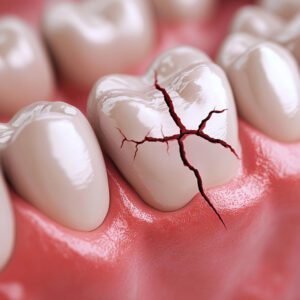
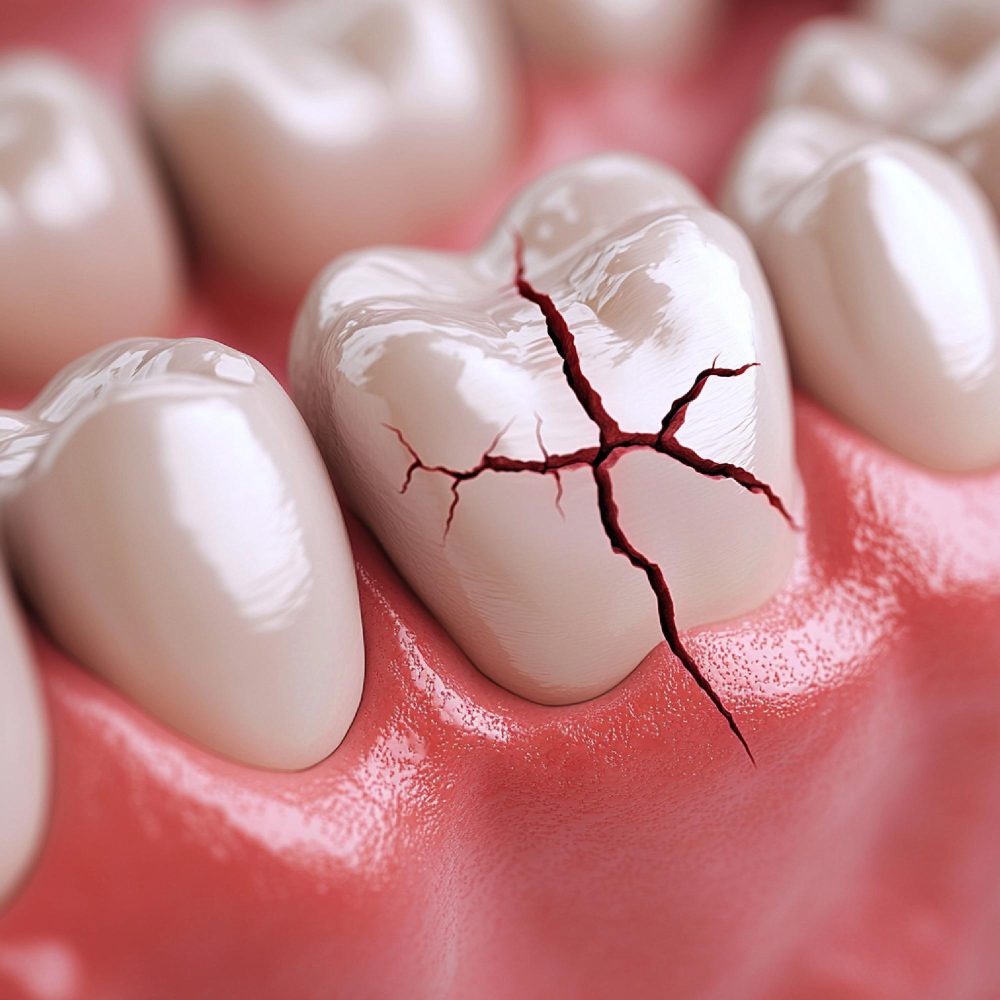
Decay hollows the tooth from inside, and a weakened cusp can break while chewing.
Spread to neighboring teeth
Plaque trapped in a cavity, especially between teeth, helps decay start on the adjacent tooth.
Bad breath and taste
Open cavities retain food and bacteria, causing bad breath that brushing does not fix.
Tooth loss and its chain reaction
After extraction, neighboring teeth may drift, chewing suffers and the jawbone gradually shrinks.
Ongoing dental pain can also affect what you eat, how you sleep and how comfortable you feel smiling. In rare cases, a dental infection spreads beyond the tooth and becomes a serious medical problem, so swelling with fever must never be managed at home. Globally, the scale is large: according to the WHO, oral diseases affect close to 3.7 billion people, and untreated decay in permanent teeth is the single most common health condition worldwide.
Treat now or wait? Early vs delayed treatment compared
Treating a cavity early usually means keeping more natural tooth, fewer visits and a more predictable result than treating it after it has reached the nerve.
| Factor | Treated early (enamel / shallow dentin) | Treated late (pulp / abscess) |
|---|---|---|
| Natural tooth preserved | Most of the tooth remains; only the decayed part is removed | Nerve removed; large parts of the crown often lost; a crown may be needed |
| Number of visits | Usually one | Often several, plus laboratory work |
| Anesthesia and comfort | Minimal; a short appointment | Longer procedures; inflamed teeth can be harder to numb |
| Risk of complications | Low | Higher: infection, fracture, retreatment or extraction |
| Tooth strength afterwards | Close to normal | Reduced; back teeth usually need a crown or onlay |
| Disruption to daily life | Practically none | Pain days, sleepless nights, urgent appointments |
Many people postpone treatment out of fear of a root canal, yet under local anesthesia it is usually more comfortable than expected — see is root canal treatment painful? The real lesson, however, is that treating early can make a root canal unnecessary in the first place.
Can decay form under old fillings and crowns?
Yes. Decay can develop at the edges of or underneath old fillings and crowns (secondary or recurrent caries), and because the restoration covers it, it may progress unnoticed until it is deep. This is a common reason why a tooth "that was already treated" suddenly becomes painful.
- Old fillings and crowns can develop tiny gaps at their edges over the years, letting bacteria in.
- Signs include a dark line around a filling, food catching at one spot or new sensitivity in a previously quiet tooth.
- Regular check-ups with X-rays where indicated catch recurrent decay while repair is still simple.
Brief sensitivity after a new filling is normal, but persistent pain should be checked — see this guide on tooth pain after a filling for what is expected and what is not.
Who is most at risk from delaying cavity treatment?
Everyone benefits from treating decay early, but for some groups delay carries higher risk because decay may progress faster or infections may be harder to control.
- Children: baby teeth have thinner enamel, so decay reaches the nerve quickly. The CDC reports that more than half of children aged 6–8 have had a cavity in a baby tooth.
- Pregnancy: diet changes, snacking and vomiting can increase risk. Check-ups and necessary treatment are generally considered safe; timing is planned with your dentist and doctor.
- People with diabetes: infections may be harder to control, and the EFP reports that people with diabetes are around three times more likely to develop periodontitis.
- Dry mouth: medications or conditions that reduce saliva can make decay progress much faster.
- Orthodontic patients: white spots around brackets are common and should be managed before they become cavities.
When should you see a dentist urgently?
See a dentist urgently if a decayed tooth causes any of the following:
- Swelling of the gum, cheek, face or under the jaw.
- Fever or feeling generally unwell together with tooth pain.
- Difficulty swallowing, breathing or opening the mouth — this needs emergency medical care straight away.
- Throbbing pain that wakes you at night or does not respond to usual painkillers.
- Pain when biting or tapping on the tooth.
- A small bump (fistula) on the gum that releases pus or a salty taste.
- A tooth that has broken or has a large visible hole.
- A previously painful tooth that has suddenly become painless and started to darken.
Painkillers only help temporarily; for safe short-term measures see our guide to the fastest pain relief for toothache.
How can you stop decay from getting worse?
The most effective way to stop decay from getting worse is to have existing cavities treated promptly and to reduce the conditions that feed decay: frequent sugar, plaque and lack of fluoride.
- Brush twice a day with fluoride toothpaste; spit rather than rinse afterwards.
- Clean between your teeth daily with floss or interdental brushes.
- Limit how often you have sugar. The WHO recommends free sugars below 10% of daily energy, ideally below 5% (about 25 g, or six teaspoons, for an adult).
- Drink water between meals; the ADA notes that cheese and fiber-rich foods help stimulate saliva and counter acids.
- Ask about fissure sealants for children — the CDC reports they prevent about 80% of cavities in the back teeth.
- Keep regular check-ups so white spots and small cavities are found early.
Key takeaways
- Early decay is usually painless — no pain does not mean no problem.
- Only the white-spot stage can sometimes be reversed; a real cavity does not heal.
- Each delay tends to add a level of treatment: filling → larger filling or onlay → root canal and crown → extraction and implant or bridge.
- Pain that suddenly stops may signal a dead nerve, not recovery.
- Swelling, fever or difficulty swallowing require urgent care.
- Treating early saves tooth structure, visits and discomfort.
Tooth decay treatment at our clinic in Istanbul
At Dr. Abdurrahman Öztürk Dental Clinic, the approach to decay is conservative: find it early, remove as little healthy tooth as possible and choose the simplest treatment likely to last. Every plan starts with an examination and, where needed, digital X-rays.
- Digital diagnostics to detect hidden decay between teeth and under old restorations.
- Conservative dentistry: tooth-colored composite fillings, and inlays or onlays for larger defects.
- Endodontics: root canal therapy in Istanbul when the nerve is involved.
- Crowns and replacement: crowns for weakened teeth, and implant or bridge planning when a tooth cannot be saved.
International patients can send recent X-rays or photos for an initial opinion; the final plan is always confirmed after the in-clinic examination, and no outcome is promised before seeing the tooth.
Related Articles
Neglecting Tooth Decay Treatment: Health Consequences and Prevention Tips Tooth Decay Treatment and Prevention: A Complete Guide Modern Types of Dental Fillings Explained Root Canal Treatment: A Step-by-Step Guide Dental Abscess Symptoms You Should Not Ignore Why Tooth Pain Gets Worse at Night The Consequences of Losing Just One Tooth How to Prevent Jawbone Loss After Tooth LossNot sure how far your cavity has progressed?
A short examination can show whether a spot on your tooth still needs only fluoride, a small filling or something more. Send us a message — our team at Dr. Abdurrahman Öztürk Dental Clinic will help you plan a check-up in Istanbul.
Contact Us on WhatsApp Visit WebsiteFrequently Asked Questions
How long can I wait before getting a cavity filled?
There is no safe fixed waiting time, because decay speed varies. If a filling has been advised, it is best not to postpone it.
Can a small cavity turn into a root canal?
Yes. Left untreated, decay can spread through the dentin to the nerve, and a root canal is then usually needed instead of a simple filling.
Why did my tooth stop hurting after weeks of pain?
Sudden relief after strong pain may mean the nerve has died. The infection can continue silently and later cause an abscess, so have the tooth examined.
Can a cavity go away with good brushing?
Only the white-spot stage may remineralize with fluoride. Once a hole has formed, brushing cannot rebuild the tooth, although it helps slow further decay.
Is it dangerous to leave a decayed tooth for a year?
It can be. Within a year, decay may reach the pulp, cause an abscess or weaken the tooth until it breaks. Only an examination can show the real risk.
Can a decayed tooth affect the teeth next to it?
Yes. A cavity traps plaque and food, making decay on the neighboring surface more likely, and losing the tooth can cause neighbors to drift.
Do I need a crown after a root canal?
Often, especially for back teeth. Sometimes an onlay or filling is enough; the dentist decides based on how much tooth remains.
What is the difference between a filling, an inlay and an onlay?
A filling is placed directly in one visit. Inlays and onlays are made to measure for larger defects; an onlay also covers one or more cusps.
Can I get my cavities treated during a short trip to Istanbul?
Fillings are usually completed in one visit, while root canals, onlays or crowns may need a few days. Appointments are planned after examination.
Conclusion
Delaying cavity treatment rarely saves time or trouble — it usually moves the problem one step further along the chain, from a quick filling towards a root canal, a crown or even the loss of the tooth. Because early decay is often painless, regular check-ups are the most reliable way to catch it at the simplest stage. If you have a cavity that has been waiting, or a tooth that has recently changed, have it examined soon. Our team at Dr. Abdurrahman Öztürk Dental Clinic in Istanbul will be glad to assess it and explain your options clearly.
Sources & References
- World Health Organization (WHO). Oral health – Fact sheet. 2025. who.int
- National Institute of Dental and Craniofacial Research (NIDCR, NIH). Tooth Decay. nidcr.nih.gov
- NHS (UK). Tooth decay. Reviewed 2025. nhs.uk
- Centers for Disease Control and Prevention (CDC). Oral Health Tips for Children. cdc.gov
- NHS (UK). Taking care of children's teeth. nhs.uk
- World Health Organization (WHO). WHO calls on countries to reduce sugars intake among adults and children. 2015. who.int
- American Dental Association – MouthHealthy. Diet and Dental Health: Food Tips. mouthhealthy.org
- European Federation of Periodontology (EFP). What is periodontitis? efp.org