Sinus Lift Surgery in Turkey: Lateral Window, Bone Grafts and PRF in Istanbul
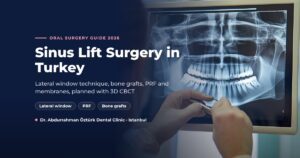
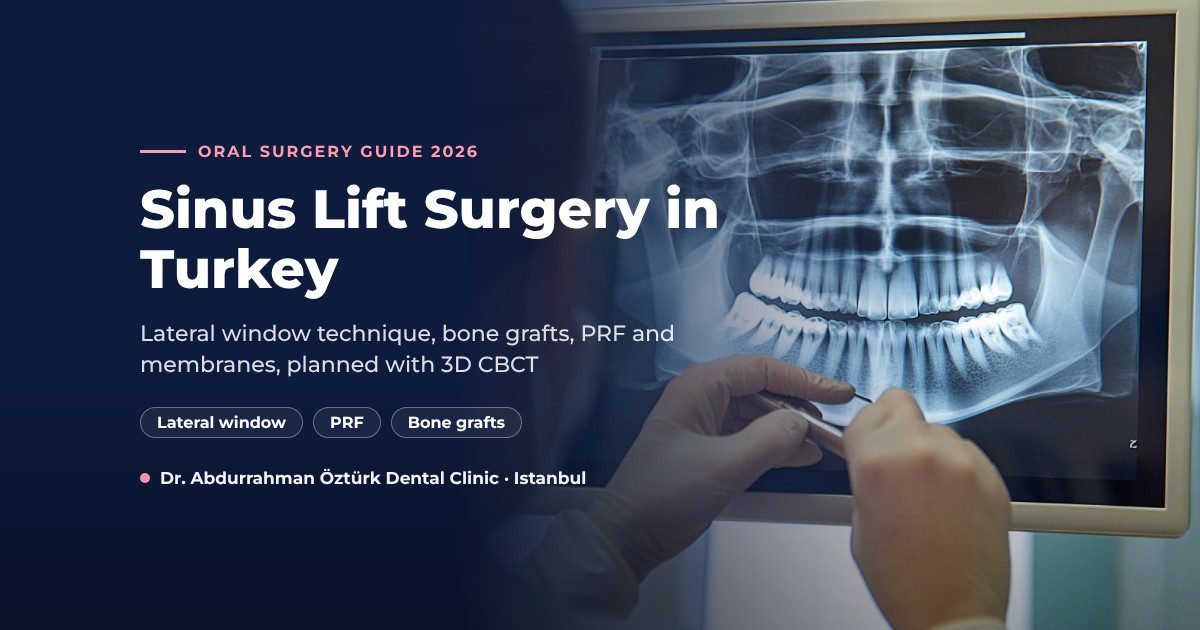
Sinus lift surgery in Turkey rebuilds lost bone in the back of the upper jaw so that dental implants have something solid to anchor in. At our clinic in Taksim (Beyoğlu, Istanbul) it is planned on a 3D CBCT scan and done with the lateral window or crestal technique.
This guide from the Dr. Abdurrahman Öztürk Dental Clinic explains the surgery step by step, graft materials, membranes, PRF, healing time and published risks.
Last updated: 26 November 2026
Quick answer: what is sinus lift surgery in Turkey?
Sinus lift surgery in Turkey is an oral surgery procedure that gently lifts the membrane lining the maxillary sinus and fills the space beneath it with bone graft material. It adds bone height above the upper molars and premolars so implants can be placed, either at the same visit or after about 4 to 9 months of healing.
The lateral window approach is generally used when less than about 5 mm of bone remains, and the crestal approach when more bone is left [1][4]. In a 2024 meta-analysis of 2,168 lateral procedures, the membrane tore in 19% of cases, usually a manageable event [1].
Important medical note
This article is general information based on the published sources listed below. It does not replace a clinical examination. Whether you need a sinus lift, which technique suits you and how long you need to heal are decided only after your CBCT scan and consultation.
Told you need a sinus lift before implants?
Send us your CBCT scan or panoramic X-ray on WhatsApp. Our team will tell you whether a lateral window sinus lift, a crestal lift, short implants or another option fits your case.
Send my X-ray on WhatsAppWhat is the maxillary sinus and why does it matter for implants?
The maxillary sinus is an air-filled space inside the cheekbone, sitting directly above the roots of the upper back teeth. It is lined by a thin, delicate layer called the Schneiderian membrane.
Often only a few millimetres of bone separate the sinus floor from the mouth in the molar area. An implant needs enough bone height to be held firmly, so a thin sinus floor is a common reason an upper implant cannot be placed straight away.
A sinus lift (also called sinus augmentation or maxillary sinus floor elevation) creates new bone height inside the lower part of the sinus, without changing the shape of the face.
Why is bone height lost after upper molars are removed?
Jawbone is kept in shape by the teeth it holds. Once an upper molar is extracted, several processes reduce the available bone:
- Ridge resorption: the bone shrinks in height and width, especially in the first months.
- Sinus pneumatization: the sinus expands downward into the space the roots occupied.
- Gum disease and old infections: these can destroy bone before the tooth is lost.
Researchers describe pneumatization with age as a frequent cause of minimal residual bone height in the upper back jaw [1].
Lateral window or crestal sinus lift: which one do you need?
There are two main ways to reach the sinus floor. The choice depends mainly on the residual bone height (RBH), meaning how many millimetres of bone remain under the sinus on the CBCT scan.
Lateral window (direct)
A small opening in the side wall of the sinus lets the surgeon see the membrane and place more graft.
Crestal / osteotome (indirect)
The sinus floor is pushed up through the implant hole. Less invasive, but lifts less height.
No lift needed
With enough bone, a standard or short implant goes in directly.
A 2024 review summarised commonly used thresholds [4]:
| Residual bone height | Typical approach | Implant timing |
|---|---|---|
| 3 mm or less | Lateral window sinus lift | Delayed (staged) implant after healing |
| More than 3 mm to 5 mm | Lateral window, or crestal lift with short implants | Often simultaneous |
| More than 5 mm to 9 mm | Crestal (transalveolar) sinus lift | Simultaneous standard implant |
Current guidance cited in a 2024 PLOS ONE meta-analysis recommends the lateral window when RBH is under 5 mm and the crestal technique when it is over 5 mm [1]. The same review notes that the crestal approach can lift the sinus by up to about 5 mm [4].
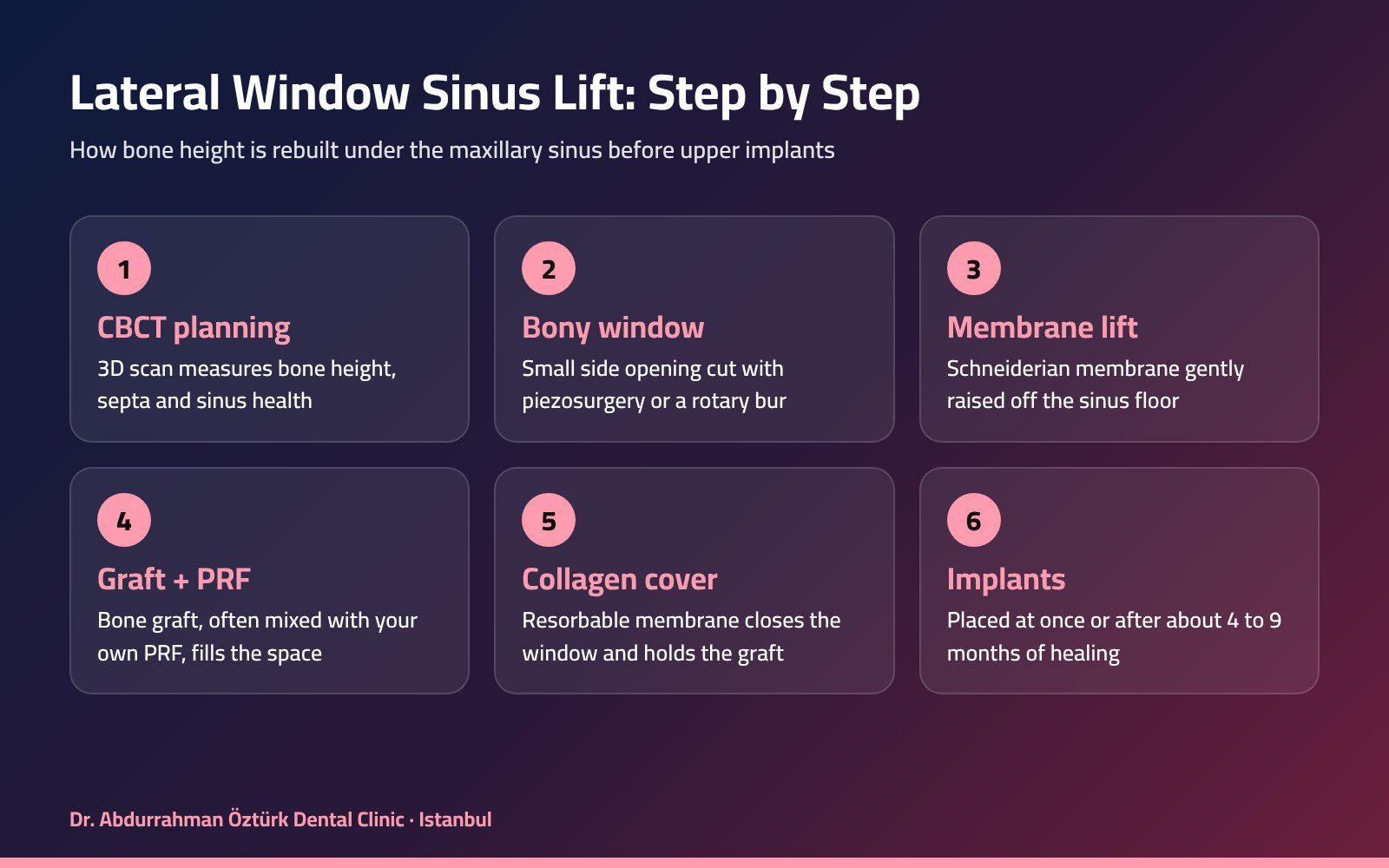
How is a lateral window sinus lift done, step by step?
Which bone graft materials are used in a sinus lift?
A bone graft is a scaffold for your own bone to grow into; in the sinus it holds the lifted space open [8].
| Graft type | Source | Main strengths | Main limitations |
|---|---|---|---|
| Autograft | Your own bone | Living cells; the reference standard | Limited amount; may need a second site; resorbs faster |
| Allograft | Processed human donor bone | No second site; good handling | Variable resorption |
| Xenograft (deproteinized bovine bone) | Purified cattle bone mineral | Keeps volume well; the most widely used sinus graft [8] | Slow turnover; some patients prefer to avoid animal material |
| Alloplast (e.g. beta-TCP) | Synthetic calcium phosphate | No human or animal source | Resorption varies by product |
A 2025 systematic review of 49 randomised trials covering 1,722 lateral sinus lifts found implant survival of 84.6% to 100%, with no relevant difference linked to the graft material [7]. In other words, surgical technique and case selection matter at least as much as which graft is used.
What is PRF and does it help a sinus lift heal?
PRF (platelet-rich fibrin) is a natural gel made from a small sample of your own blood, rich in platelets, white cells and growth factors, used to support healing.
It is prepared during your appointment: blood is drawn from the arm into tubes without anticoagulant and spun in a centrifuge for a few minutes. The fibrin clot that forms is shaped into membranes or mixed with graft particles.
L-PRF
The classic form, pressed into thin membranes to cover the window or a small tear.
A-PRF
Spun at a lower speed so more cells stay in the clot; used like L-PRF.
i-PRF
A liquid form that binds graft particles into "sticky bone" that is easier to place [4].
What the evidence says, honestly:
- A 2019 meta-analysis of five randomised trials found no statistically significant difference in new bone formation or implant survival when PRF was added to bone grafts in sinus lifts [5].
- A 2025 meta-analysis of five trials (140 patients) found that L-PRF combined with bovine bone increased new bone formation by a mean of about 7 percentage points compared with bovine bone alone [6].
- Reviews generally agree that PRF supports soft-tissue healing and graft handling, while its effect on final bone gain is still debated [4].
We use PRF where it helps handling or soft-tissue healing, not as a promise of faster or more bone.
Which membranes are used and what if the sinus membrane tears?
- The Schneiderian membrane is your own sinus lining, which is lifted.
- A barrier membrane covers the bony window. Resorbable collagen membranes dissolve on their own; non-resorbable ones (such as PTFE) are rarely needed here and must be removed later.
A tear in the Schneiderian membrane (perforation) is the most common event during surgery. Reported rates range from 7% to 56% [2]. In a 2024 meta-analysis it occurred in 39.76% of sinuses with septa versus 12.33% without [1].
Small tears are usually repaired on the spot with a collagen or PRF membrane. Larger tears may mean stopping and repeating the lift after the lining heals [8].
The good news: a 2024 meta-analysis found implant survival of 97.7% in non-perforated sinuses and 97.1% in repaired perforated sinuses, with no significant difference [2].
How long does healing take after a sinus lift?
Most patients return to daily life within about a week, but the graft takes months to become bone. With the lateral approach, the graft typically needs 4 to 9 months to integrate before implants are placed, depending on the amount of bone needed and the graft material [8].
What are the risks and warning signs after a sinus lift?
Sinus lifts are well established, but every surgery carries risks:
- Membrane perforation: 19% overall in 2,168 lateral procedures [1]; usually repaired during surgery.
- Postoperative sinusitis or graft infection: reported as low in prevalence, but more frequent when the membrane was perforated or the patient has pre-existing sinus problems [3].
- Graft loss or partial resorption: part of the graft may not turn into bone, especially if infected or exposed.
- Bleeding, swelling and temporary numbness of the cheek or gum.
Call the clinic straight away if you notice
Fever or chills; worsening pain or swelling after day 3; thick, yellow-green or foul-smelling nasal discharge from one side; graft granules coming out of the nose or mouth; air or liquid passing between mouth and nose; or heavy bleeding that does not stop with pressure.
How should you care for yourself after a sinus lift?
- Do not blow your nose for about two weeks.
- Sneeze with your mouth open.
- Avoid straws, smoking and vaping while healing.
- Fly or dive only when your surgeon clears you; we plan flight dates in advance.
- Take prescribed medicines exactly as instructed.
- Eat soft, cool food on the other side and sleep with your head raised.
Who is a good candidate for sinus lift surgery?
You may be a candidate if you are missing upper premolars or molars, want fixed implant teeth, and your CBCT shows too little bone height under the sinus. Good general health and a healthy sinus are important.
Extra care is needed if you smoke heavily, have uncontrolled diabetes, chronic sinusitis or nasal polyps, or take medicines that affect bone healing. Sinus disease should be treated first, sometimes after an ENT check.
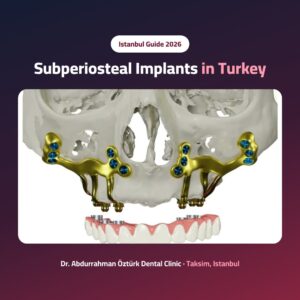
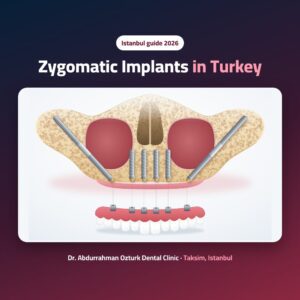
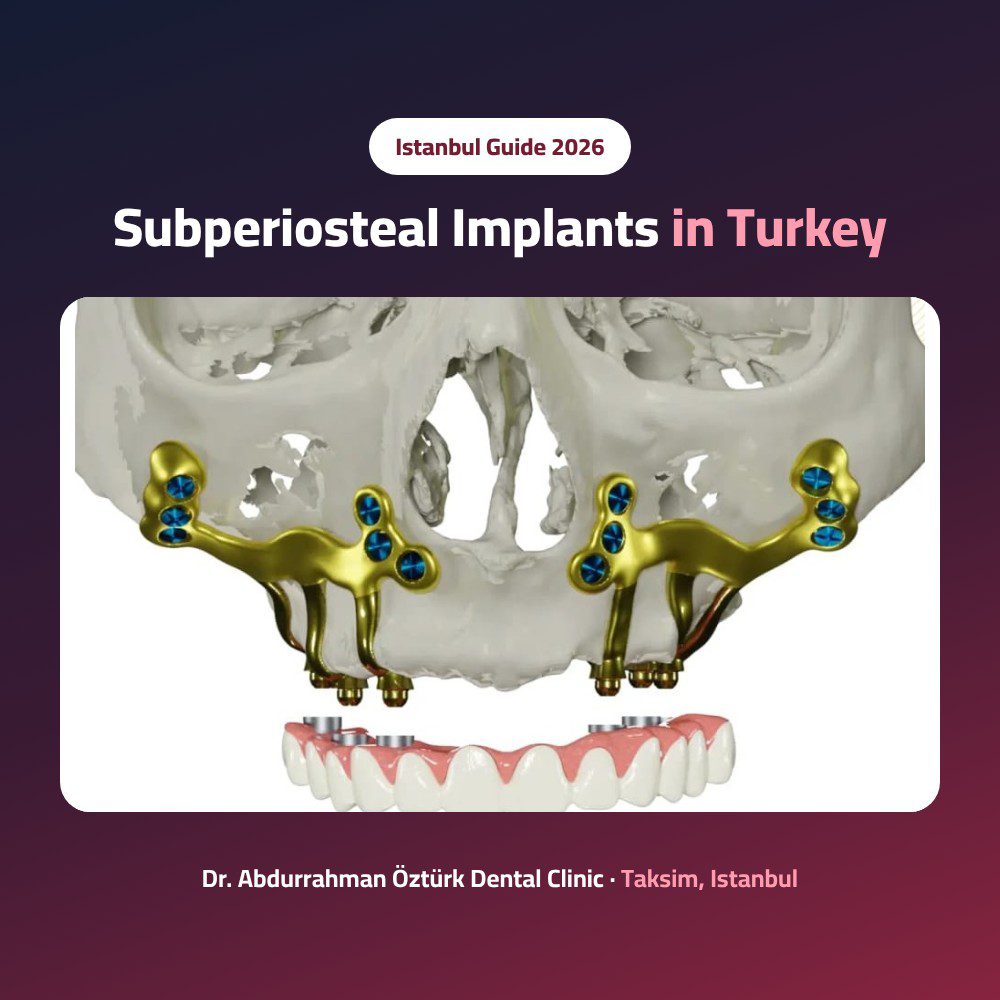
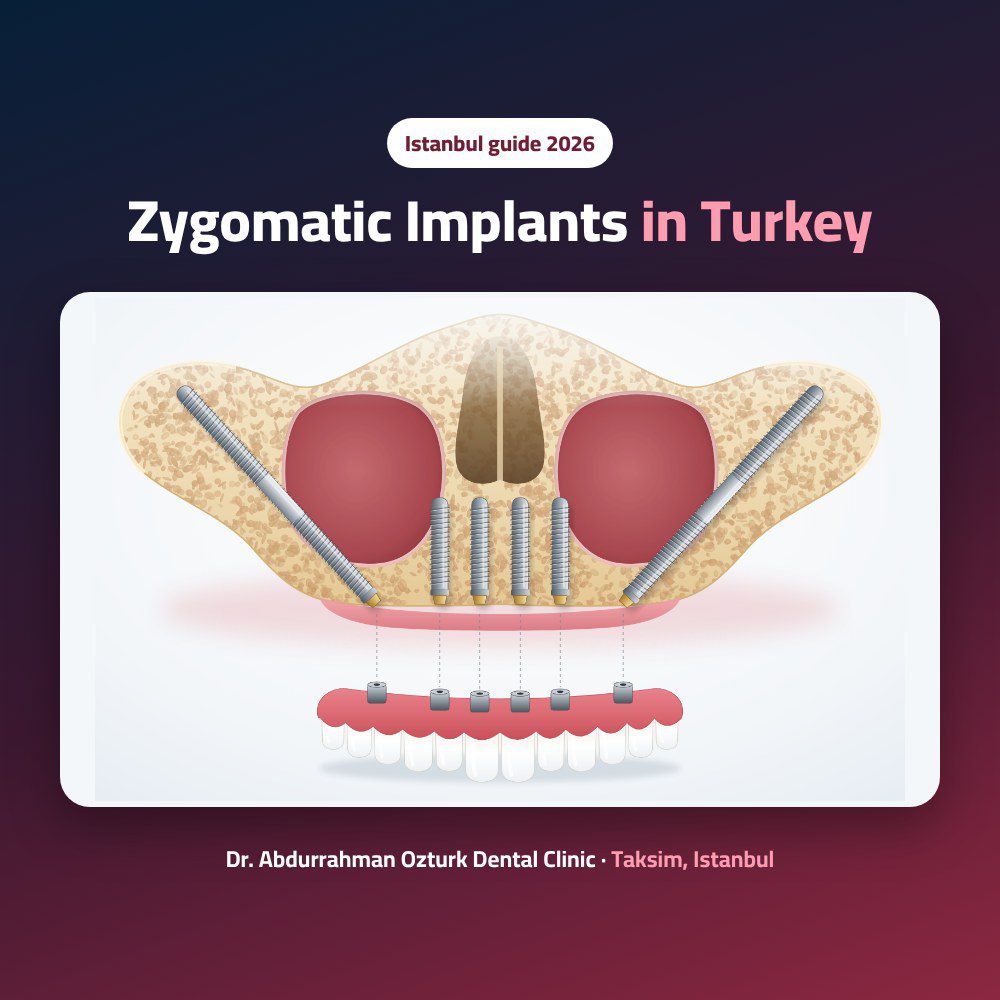
Alternatives include short implants, tilted implants in an All-on-4 design, zygomatic implants anchored in the cheekbone, or subperiosteal implants for severe bone loss.
What should you expect when you travel to Istanbul for a sinus lift?
Staged cases usually need two trips; simultaneous cases may need one longer stay.
- Before travel: free online review of your X-ray or CBCT on WhatsApp.
- Day 1: examination, CBCT in the clinic, treatment plan and consent.
- Day 2: sinus lift surgery (with or without implants).
- Days 3 to 7: check-ups; stitches are often removed before you fly.
- Second trip after 4 to 9 months: control CBCT, implant placement or crowns.
Airport transfer and hotel can be arranged by the clinic. Your written plan lists every visit and healing interval. We do not quote prices online.
Watch: dental implant treatment steps at our clinic
In this one-minute video, Dr. Abdurrahman Öztürk walks through implant treatment in Istanbul from scan to final teeth. It covers implants in general; the sinus lift is a preparation step before them.
Medically reviewed by Dr. Abdurrahman Öztürk
Dentist and medical lead of the Dr. Abdurrahman Öztürk Dental Clinic in Taksim, Istanbul, with more than 15 years of experience in implant surgery, bone grafting and full-arch treatment. This article was medically reviewed against the sources listed below on 26 November 2026.
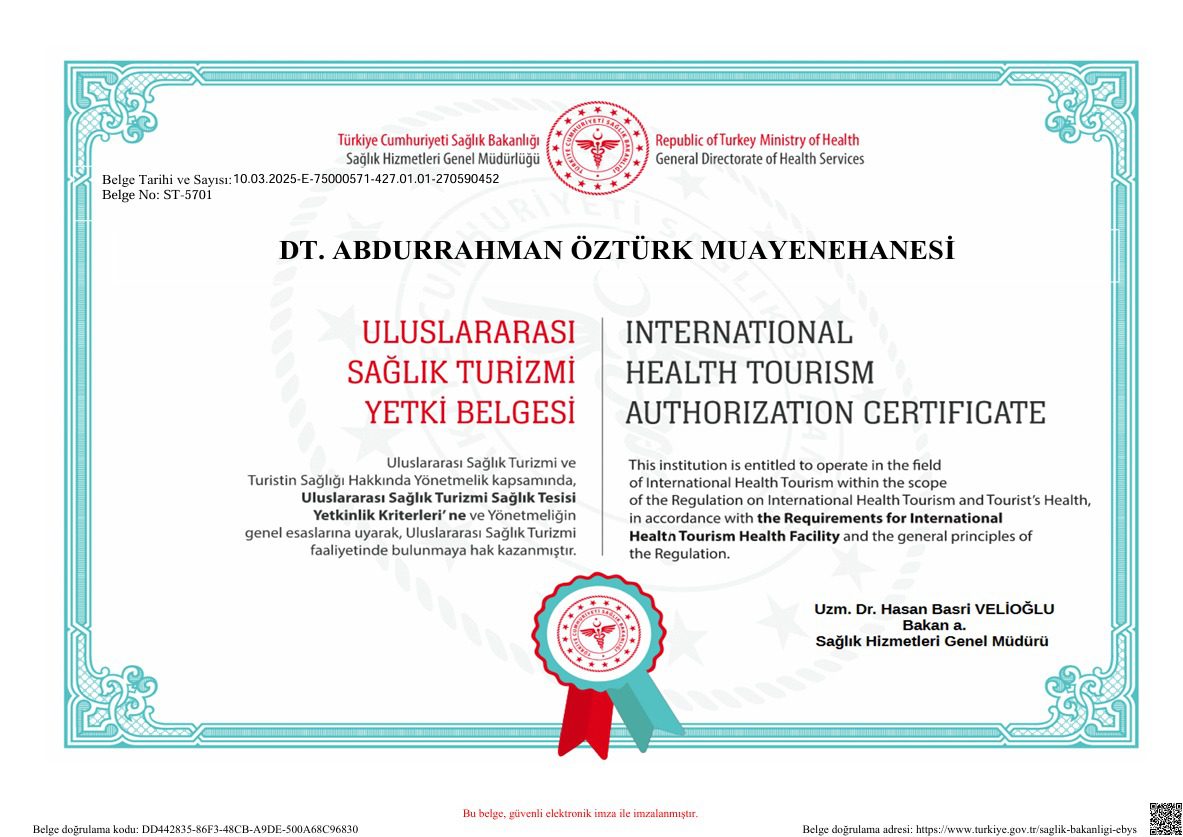
Dt. Abdurrahman Öztürk Muayenehanesi holds the Republic of Türkiye Ministry of Health International Health Tourism Authorization Certificate No. ST-5701 (issued 10.03.2025). View the certificate or verify it on turkiye.gov.tr with code DD442835-86F3-48CB-A9DE-500A68C96830.
Where is the clinic in Istanbul?
Dr. Abdurrahman Öztürk Dental Clinic
Gümüşsuyu Mah., Mete Cad., Beyoğlu, Istanbul, Türkiye
Phone and WhatsApp: +90 536 063 00 89
Hours: Monday to Friday 08:00 to 19:00, Saturday 08:00 to 15:00
The clinic is a few minutes' walk from Taksim Square, with 3D CBCT planning on site. Patients rate the clinic 5.0 on Google from 397 reviews.
Key takeaways
- A sinus lift adds bone height under the sinus so upper back implants can be placed.
- Lateral window for under about 5 mm of bone; crestal lift for more.
- Graft type showed no clear effect on implant survival in 49 randomised trials.
- PRF helps soft-tissue healing; its effect on bone gain is debated.
- About 1 in 5 lateral lifts has a membrane tear; repaired tears did not lower implant survival.
- Graft healing typically takes 4 to 9 months.
Find out if you need a sinus lift
Send your CBCT or X-ray and a short note about which teeth are missing. Our team in Taksim will reply with the options that fit your case.
Ask about sinus lift surgery on WhatsApp Oral surgery at our clinicRelated articles
Bone graft surgery for dental implants Dental implants in Turkey (Istanbul) Oral and maxillofacial surgery in Turkey Zygomatic implants in Turkey: an option without a sinus lift Subperiosteal implants in Turkey for severe bone loss Sinus lift surgery guide (Dental Implants in Turkey) How long after tooth extraction can you get an implant? (Taksim Clinics) Guided implant surgery in Istanbul (Aident Clinic)Frequently asked questions about sinus lift surgery in Turkey
What is a sinus lift?
Surgery that lifts the sinus lining and places bone graft beneath it, adding bone height so upper back implants can be placed.
When is the lateral window technique used instead of a crestal lift?
Mainly when less than about 5 mm of bone remains. With more bone, a crestal lift is often enough.
Can implants be placed at the same time as the sinus lift?
Yes, if the remaining bone holds the implant firmly. With less bone, implants follow after the graft heals.
How long does a sinus lift take to heal?
About a week for daily life; typically 4 to 9 months for the graft to become bone.
Which bone graft is best for a sinus lift?
None is clearly best. A 2025 review of 49 randomised trials found similar implant survival across graft materials.
Does PRF make a sinus lift heal faster?
It supports soft-tissue healing and graft handling; evidence on extra bone gain is mixed.
What happens if the sinus membrane tears during surgery?
It is usually repaired on the spot. A 2024 meta-analysis found 97.1% implant survival after repaired tears versus 97.7% without.
Is sinus lift surgery painful?
It is done under local anaesthesia, with sedation if needed. A few days of swelling and discomfort are common.
How many trips to Istanbul do I need?
Usually two when implants are staged, 4 to 9 months apart; simultaneous cases may need one longer stay.
How do I start?
Send your CBCT or panoramic X-ray on WhatsApp to +90 536 063 00 89 for a free online consultation. A full written plan follows your examination.
Sources
- Sinus septa, lateral wall thickness and perforation risk in sinus lift: meta-analysis. PLOS ONE. 2024. pmc.ncbi.nlm.nih.gov
- Schneiderian membrane perforation and implant survival: meta-analysis. Journal of Clinical Medicine. 2024. pmc.ncbi.nlm.nih.gov
- Outcomes of sinus floor and sinus membrane perforation: meta-analysis. Journal of Clinical Medicine. 2024. pmc.ncbi.nlm.nih.gov
- Evolving techniques in maxillary sinus lift procedures: a review. Cureus. 2024. pmc.ncbi.nlm.nih.gov
- Platelet-rich fibrin added to bone graft in sinus augmentation: meta-analysis of RCTs. BioMed Research International. 2019. pmc.ncbi.nlm.nih.gov
- L-PRF with bovine bone mineral for sinus augmentation: meta-analysis of RCTs. Cureus. 2025. pmc.ncbi.nlm.nih.gov
- Graft materials for lateral sinus floor augmentation: systematic review. Clinical Implant Dentistry and Related Research. 2025. pmc.ncbi.nlm.nih.gov
- Cambridge University Hospitals NHS Foundation Trust. Sinus lift procedures (patient information). cuh.nhs.uk