Yellow Teeth: Causes, Treatment and the Safest Ways to Whiten Your Smile
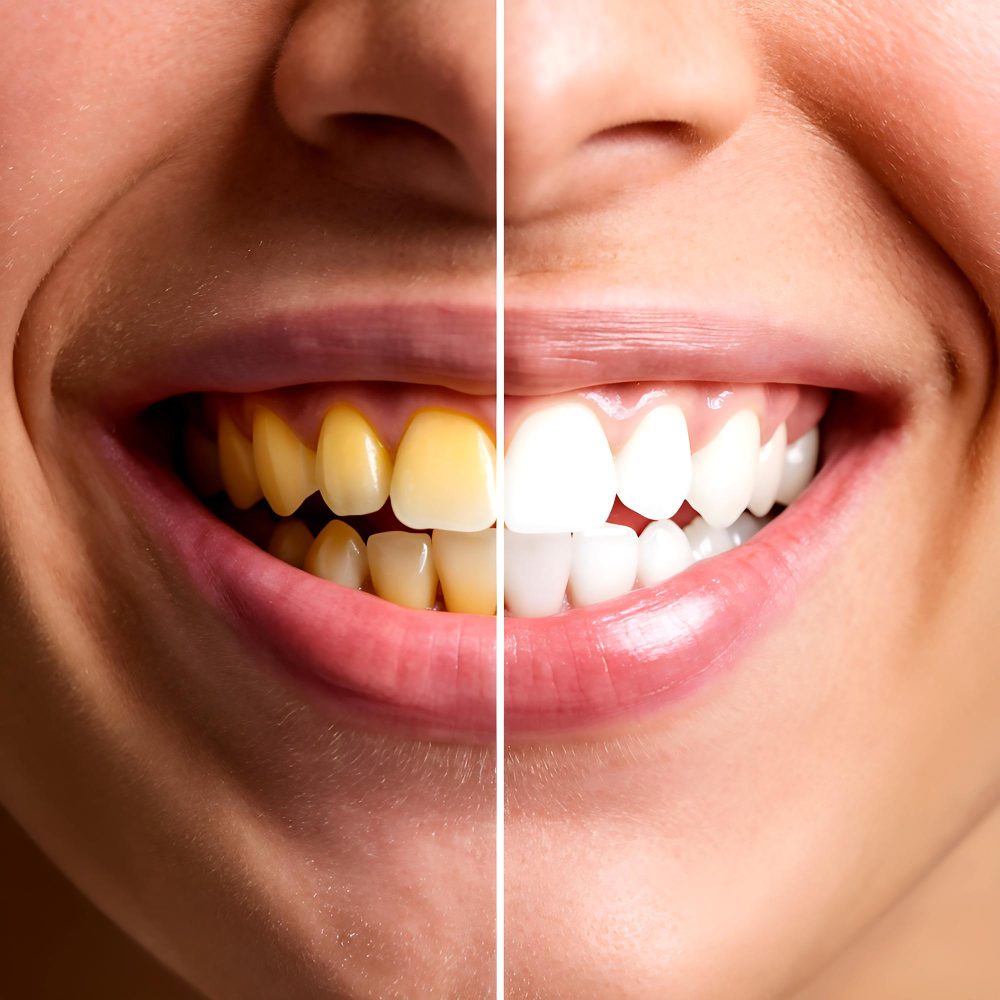
Yellow teeth are one of the most common reasons people feel self-conscious about their smile. Your teeth can be perfectly healthy, yet in photos they look dull and older than you are, even when you brush twice a day.
This guide explains surface vs deeper discoloration, why teeth yellow with coffee, tea, smoking and age, the truth about home remedies, and which whitening options are safe.
At Dr. Abdurrahman Ozturk Dental Clinic in Istanbul, every whitening conversation starts with one question: what kind of yellowing are we looking at? The answer decides which treatment is the most suitable, and the safest, for your teeth.
Quick answer: what causes yellow teeth and what is the best treatment?
Yellow teeth have two main causes: extrinsic stains on the enamel from coffee, tea, smoking and tartar, which usually respond to a professional clean and whitening; and intrinsic discoloration inside the dentin from ageing, certain medicines, injury or excess fluoride, which may need bonding, veneers or crowns instead.
The safest approach is a check-up and professional clean first, then in-office whitening or custom take-home trays chosen by your dentist. Acidic or abrasive DIY remedies can make teeth look more yellow over time because they wear away enamel.
Important medical note
This article is general information and does not replace an examination. One tooth turning grey or brown may signal a nerve problem after an old knock, and brown or black spots may be decay. Have your teeth and gums checked before any whitening; your dentist decides the right treatment.
Extrinsic vs intrinsic stains: what type of yellow teeth do you have?
Extrinsic stains sit on the enamel surface and come from food, drinks and tobacco, while intrinsic stains sit inside the tooth, in the dentin, beyond a toothbrush's reach. This Cleveland Clinic classification is the key to choosing the right treatment.
| Feature | Extrinsic (surface) stains | Intrinsic (internal) stains |
|---|---|---|
| Where they are | On the enamel surface | Inside the tooth, in the dentin |
| Most common causes | Coffee, tea, red wine, dark sodas, smoking and vaping, tartar | Ageing, medicines such as tetracycline, dental fluorosis, trauma, genetics |
| Typical appearance | Yellow or brown, mostly along the gumline and between teeth | Even color across the tooth, bands or patches, or one grey tooth |
| Does cleaning remove them? | Often yes, partly or completely | No |
| Usually the best option | Scale and polish, then whitening if needed | Supervised whitening, bonding, veneers or crowns |
Many people have both, which is why an accurate diagnosis matters more than any product on the shelf.
What causes yellow teeth? The most common reasons
The most common causes of yellow teeth are dark drinks, tobacco and tartar, then enamel thinning with age, acid erosion, and internal causes such as medicines, excess fluoride, injury and genetics.
Coffee and tea
Coffee, black tea and red wine sipped all day are major stain sources; frequency matters more than quantity. See how coffee, tea and soda affect your teeth and enamel.
Smoking, vaping and shisha
Tar and nicotine leave a yellow-to-brown film that brushing struggles to remove. Read more about smoking and your dental health.
Tartar (calculus)
Plaque left behind hardens into yellow or brown tartar. Cleveland Clinic notes that tartar cannot be removed by brushing or flossing and can discolor teeth.
Age and thinning enamel
Enamel gradually wears thinner over the years, letting yellow dentin show through, which is why teeth often look more yellow after 40.
Acid erosion
Soft drinks, acidic juices and reflux dissolve enamel, leaving teeth yellow and see-through at the edges. Learn about tooth erosion causes and solutions.
Medicines, fluoride, injury and genes
Childhood tetracycline can leave grey or brown bands, excess fluoride can cause white or brown patches, an old injury can darken one tooth, and some people simply have darker dentin.
Fluoride at recommended levels in toothpaste helps protect against decay; fluorosis is linked to excessive exposure while teeth are still forming. For the full picture, read is fluoride safe for teeth?
Why are my teeth yellow even though I brush every day?
If your teeth are yellow despite brushing, the cause is usually not on the surface: it may be the color of the dentin underneath, hardened tartar a toothbrush cannot remove, or stains returning faster than you brush them away.
- Natural dentin color: healthy teeth are not naturally bright white. Dentin is yellowish, and the thinner the enamel, the more it shows.
- Hardened tartar: once plaque hardens, only a professional clean removes it. If it has spread below the gums, a deeper clean such as scaling and root planing may be recommended.
- Brushing too hard: heavy pressure, hard bristles and abrasive toothpastes wear enamel, so over-cleaning can make yellow teeth look worse.
- Frequent sipping: a coffee every hour keeps re-staining your teeth, even if you brush morning and night.
How do yellow teeth develop over time?
Yellow teeth rarely appear overnight. Discoloration builds up in stages, and many can be stopped early.
Does baking soda whiten teeth? The truth about home remedies
Baking soda may lift some surface stains because it is a mild abrasive, but it does not change the internal color of the tooth, and frequent hard scrubbing can scratch enamel and make teeth stain more easily later.
Social media is full of quick fixes that promise to get rid of yellow teeth at home in days. Most are either acidic, dissolving enamel, or abrasive, wearing it away. Both eventually let more yellow dentin show through.
| Myth | Fact |
|---|---|
| Lemon juice or vinegar with salt whitens teeth fast | Acid dissolves enamel; teeth may look lighter briefly, then more yellow and sensitive. |
| Daily baking soda gives you white teeth | It may remove light surface stain, but it does not whiten internal color, and hard scrubbing can scratch enamel. |
| Activated charcoal is natural, so it is safe | Charcoal is abrasive, does not lighten dentin, and can collect in cracks and around fillings. |
| Turmeric whitens teeth | Turmeric is a strong natural dye, with no solid evidence that it whitens teeth. |
| Scrubbing harder removes the yellow | Aggressive brushing wears enamel and can cause gum recession, so dentin shows more. |
| All over-the-counter whitening products are safe | Cleveland Clinic warns some may damage enamel; choose products with the American Dental Association (ADA) Seal of Acceptance. |
What is the best treatment for yellow teeth at the dentist?
The best yellow teeth treatment starts with tartar removal and polishing, followed by in-office whitening or custom take-home trays; if the color does not respond, bonding, veneers or crowns are considered.
1. Professional cleaning and polishing first
Many patients find that much of their "yellow" was tartar and surface stain that disappeared after one cleaning, and whitening over tartar gives an uneven result. Cleveland Clinic notes that most people need a professional cleaning about every six months, though this varies.
2. In-office (professional) whitening
The dentist protects your gums and applies a concentrated gel. According to Cleveland Clinic, a session takes about an hour, with full control over the material and protection of the soft tissues.
3. Custom take-home whitening trays
This is the safe way to do teeth whitening at home: trays made to fit your teeth, with a gel strength chosen by your dentist. Cleveland Clinic notes they are typically worn 30 to 60 minutes a day for up to six weeks, and they let you continue treatment after returning home from Istanbul.
4. Cosmetic bonding
Tooth-colored composite resin covers a spot, band or worn edge, usually with little or no removal of tooth structure; see our article on dental bonding for broken teeth. According to Cleveland Clinic, bonding may need repair or replacement roughly every 5 to 7 years.
5. Veneers (porcelain shells)
Veneers suit stubborn intrinsic discoloration, such as tetracycline staining or severe fluorosis, or patients who want to change shape and color together. Cleveland Clinic notes they typically last 10 to 15 years and that porcelain veneers require removing a small amount of enamel that cannot be restored. Read more about veneers and zirconium crowns in Istanbul.
6. Crowns (caps)
A crown is chosen when a tooth is both discolored and weakened, for example after root canal treatment or a large fracture. According to Cleveland Clinic, crowns usually last 5 to 15 years, and up to 30 with good care.
Decision table: type of yellowing and the best solution
This table summarizes how a dentist moves from cause to treatment. It is a general guide; the final decision follows an examination.
| Type or cause | What it looks like | Usually the best option |
|---|---|---|
| Coffee, tea, dark drinks | Surface yellow or brown, mostly between teeth | Scale and polish, then whitening if needed |
| Smoking, vaping, shisha | Dark brown stains behind lower teeth | Professional clean, whitening, and quitting tobacco |
| Tartar build-up | Hard deposits at the gumline | Tartar removal first, then reassess color |
| Ageing, thinning enamel | Even yellow across all teeth | Supervised whitening; yellow shades often respond well |
| Acid erosion | See-through edges with sensitivity | Treat the cause first, then bonding or veneers if needed |
| Tetracycline staining | Grey or brown horizontal bands | Extended whitening may help partly; veneers often more effective |
| Dental fluorosis | Chalky white or brown patches | Bonding or veneers; whitening may help mild cases |
| One dark tooth after injury | Single grey or brown tooth | X-ray and nerve check, then internal whitening, crown or veneer |
Does teeth whitening cause sensitivity, and how can you manage it?
Yes, temporary sensitivity is one of the most common side effects of whitening. It is usually mild and fades within days, but tends to be worse with strong, unsupervised products or overuse.
- Treat cavities, leaking fillings and receding gums first, as they let the gel reach the nerve more directly.
- Use a fluoride toothpaste for sensitive teeth for several days before and after whitening.
- Stick to the wearing time and gel strength your dentist sets; longer wear will not speed up results.
- Avoid very cold or very hot drinks for the first few days.
If your teeth were sensitive before whitening, read our partner clinic's guide to tooth sensitivity causes and treatment methods and mention it to your dentist.
How long does whitening last, and how do you stop yellow teeth coming back?
Whitening usually lasts from several months to a few years, depending mainly on coffee, tea, smoking and regular dental care.
Whitening does not make teeth stain-proof. Useful tips:
- Have coffee and tea at set times rather than sipping all day, then rinse with water.
- Use a straw for sodas and colored juices.
- Cut down on or quit smoking, vaping and shisha, the fastest route back to yellow.
- Brush twice daily with fluoride toothpaste and floss daily.
- Keep up regular cleanings and ask about occasional top-ups with your own trays.
The American Dental Association recommends calcium- and phosphorus-rich foods, water and less frequent snacking to protect enamel.
When is whitening not the answer for yellow teeth?
Whitening is not the right answer when discoloration is deep and intrinsic, when the cause is severe enamel erosion, or when front teeth have many fillings and crowns, which whitening gels do not lighten.
Here, repeated whitening may only cause sensitivity; bonding, veneers or a crown are usually better alternatives.
Warning signs: when to see a dentist about discolored teeth
Some changes in tooth color are not just cosmetic and should be checked soon:
- A single tooth that has turned grey or brown, especially after a knock or fall.
- Brown or black spots with pain or sensitivity to sweet or cold, which may be decay.
- New chalky white spots along the gumline, which can be an early sign of decay.
- Yellowing with bleeding gums or persistent bad breath, often pointing to tartar and gum inflammation.
- Severe pain or swelling after using an at-home whitening product.
How can you prevent yellow teeth?
Preventing yellow teeth means reducing stain sources, protecting enamel from acid and abrasion, and removing plaque before it hardens into tartar.
- Use a soft-bristled toothbrush with gentle strokes, replacing it about every three months.
- Do not brush straight after juice or soft drinks; rinse with water and wait a little.
- Drink water after coffee and tea; sugar-free gum boosts protective saliva.
- Eat cheese, milk and fiber-rich vegetables, which the American Dental Association says help protect enamel and stimulate saliva.
- See your dentist regularly so tartar is removed early.
The World Health Organization reports that oral diseases affect nearly 3.7 billion people worldwide, most of them preventable with these same daily habits.
Key takeaways on yellow teeth
- Yellow teeth are extrinsic (on the enamel) or intrinsic (in the dentin), and treatment depends on the type.
- Coffee, tea, tobacco and tartar are the most common causes, along with ageing and erosion.
- Yellow teeth despite brushing usually mean tartar or internal color.
- Lemon, charcoal, turmeric and overused baking soda can harm enamel.
- The safe path: examination, cleaning, supervised whitening, then cosmetic options if needed.
Yellow teeth treatment at our clinic in Istanbul
At Dr. Abdurrahman Ozturk Dental Clinic we start with a full examination, record your shade, and check for tartar, decay, gum recession and old restorations. We then explain honestly whether your yellowing is surface or internal, and what whitening can achieve.
Your plan may include a clean and polish, in-office whitening, custom trays to continue at home, or bonding and veneers when color does not respond to whitening, tailored to the length of your stay in Istanbul. Results vary from person to person, and the dentist recommends the most suitable option after the examination.
Related articles
Why do teeth turn yellow again after whitening? Why do permanent teeth look more yellow than baby teeth? Dental veneers and crowns at Dr. Abdurrahman Ozturk Clinic No-prep veneers: can you get veneers without shaving your teeth? Can dental veneers be removed? Cosmetic restoration of broken front teeth How to choose the best Hollywood smile clinic in Turkey Signs it is time to visit the dentistWant to know what type of yellow teeth you have and the best way to whiten them?
Send us a clear daylight photo of your smile and a note about any previous dental work, and our team will help arrange an examination in Istanbul.
Contact us on WhatsApp Visit our websiteFrequently asked questions
What is the fastest and safest treatment for yellow teeth?
In-office whitening after tartar removal is usually fastest, taking about an hour under supervision. The safest option is the one that matches your type of yellowing, which your dentist decides after an examination.
Why are my teeth yellow when I brush them twice a day?
Usually because the color comes from the dentin beneath the enamel, hardened tartar is present, or coffee, tea and smoking keep re-staining your teeth. Brushing too hard can also wear enamel and worsen yellowing.
Does baking soda really whiten teeth?
It may remove light surface stains because it is mildly abrasive, but it does not change the tooth's internal color. Frequent use, mixing it with lemon or scrubbing hard can damage enamel.
Can lemon or activated charcoal remove yellow stains from teeth?
Neither is recommended. Lemon is acidic and dissolves enamel, while charcoal is abrasive and does not whiten dentin. Teeth may look lighter briefly, then more yellow and sensitive.
What is the best way to whiten teeth at home?
Custom whitening trays made by your dentist, used with a gel of suitable strength, typically for 30 to 60 minutes a day for several weeks as instructed.
Do teeth turn yellow again after whitening?
Yes, color gradually returns with coffee, tea and smoking, at a pace that varies between people. Reducing stain sources, regular cleanings and occasional top-ups help results last longer.
Does teeth whitening damage enamel or cause permanent sensitivity?
Dentist-supervised whitening is generally considered safe and may cause temporary sensitivity that usually fades within days. Strong unsupervised products or excessive repeat whitening may increase sensitivity and gum irritation.
Will whitening change the color of my fillings, veneers or crowns?
No. Whitening gels do not change the color of restorations, so front fillings or crowns may need replacing afterwards to match your new shade; your dentist will plan this in advance.
When do I need veneers instead of teeth whitening?
When discoloration is deep and intrinsic, such as tetracycline staining or severe fluorosis, when teeth are worn or chipped, or when you want to change shape and color together. Your dentist decides after an examination.
Conclusion
Yellow teeth are a sign of different causes: surface stains from coffee, tea and tobacco, tartar, dentin showing through thinning enamel, and sometimes medicines, fluoride or injury. The best yellow teeth treatment starts by identifying the type, then moves step by step from cleaning to safe whitening, using veneers or crowns only when they are genuinely the most suitable solution. Avoid acidic and abrasive home remedies; if you plan to whiten your teeth in Istanbul, the team at Dr. Abdurrahman Ozturk Dental Clinic would be glad to examine your teeth and suggest the right plan.
Sources & References
- Cleveland Clinic. Tooth Discoloration. clevelandclinic.org
- Cleveland Clinic. Tartar (Dental Calculus). clevelandclinic.org
- Cleveland Clinic. Dental Veneers. clevelandclinic.org
- Cleveland Clinic. Dental Crowns. clevelandclinic.org
- American Dental Association – MouthHealthy. Diet and Dental Health: Food Tips. mouthhealthy.org
- World Health Organization (WHO). Oral Health – Fact Sheet, 2025. who.int