Composite vs Porcelain Veneers: Which Should You Choose Before Your Istanbul Trip?
If you are comparing composite vs porcelain veneers before booking flights to Turkey, you are asking the right question first. The material you choose decides how much of your tooth is shaped, how many appointments you need, how long you stay in Istanbul and how your smile is likely to age.
This guide from the Dr. Abdurrahman Ozturk Dental Clinic in Taksim (Beyoğlu, Istanbul) compares both options, explains each visit and shows how we help you decide before you travel.
Last updated: 5 November 2026
Quick answer: composite vs porcelain veneers
In the composite vs porcelain veneers choice, composite veneers are resin sculpted directly on your teeth, often in one or two days with little enamel removal, and are easier to repair; porcelain veneers are lab-made shells that resist staining and wear better and usually need about 5 to 7 working days in Istanbul.
Neither suits everyone; your dentist confirms the right option after an examination.
Important medical note
This article is general information and does not replace a dental examination. Most veneers involve removing some enamel, which cannot be undone. Whether veneers suit you, and which material, depends on the health of your teeth, gums and bite, and is decided by a dentist after examining you.
Not sure which veneer suits your smile?
Send us a few smile photos and tell us what you would like to change. We will tell you which options are realistic for you before you book a flight.
Ask on WhatsAppWhat are composite veneers and porcelain veneers?
A veneer is a thin, tooth-coloured covering bonded to the front surface of a tooth to change its colour, shape or size. Cleveland Clinic notes that veneers are cosmetic: they hide chips, gaps and stains but do not necessarily strengthen a tooth the way a crown does.
Composite veneers
Tooth-coloured composite resin, the same material used for dental bonding, sculpted by the dentist directly on the tooth, hardened with a curing light and polished.
Porcelain veneers
Thin ceramic shells made in a dental laboratory from a scan or impression of your prepared teeth, then bonded in place at a later visit.
Common ground
Both cover only the front of the tooth and need healthy teeth and gums underneath.
ADA MouthHealthy, the patient site of the American Dental Association, sums up the trade-off clearly: porcelain is strong and long-lasting, while composite is easier to repair but less resistant to stains and wear. If you are also weighing up simple bonding on one or two teeth, read our comparison of dental bonding vs veneers.
Composite vs porcelain veneers: how do they compare side by side?
Composite vs porcelain veneers differ mainly in how they are made, how much enamel is shaped, how well they resist stains, how easily they are repaired and how many days you need in Istanbul. The table summarises our sources and typical planning.
| Factor | Composite veneers | Porcelain veneers |
|---|---|---|
| Material | Tooth-coloured composite resin, built in layers on the tooth | Ceramic shell (for example feldspathic porcelain or lithium disilicate) made in a lab |
| Tooth preparation | ADA MouthHealthy notes composite may need less enamel removal; sometimes little or none | A small amount of enamel is removed from the front and sides, according to ADA MouthHealthy |
| Durability (from studies) | A 2023 meta-analysis found a pooled survival rate of 88% in randomised trials with mean follow-up of 24 to 97 months | A 2021 systematic review of 6,500 veneers estimated 95.5% cumulative survival at 10 years |
| Stain resistance | Less resistant to stains and wear; may need periodic polishing | More stain- and wear-resistant |
| Repairability | Easier to repair; a chip can often be patched with fresh composite | A fractured porcelain veneer is usually replaced rather than patched |
| Visits and days in Istanbul | Often 1 to 2 visits over about 1 to 2 days | Usually 3 to 4 visits over about 5 to 7 working days |
| Who it often suits | Small chips, gaps, mild shape changes, minimal preparation | Bigger colour and shape changes, dark stains whitening cannot lift |
These figures come from different studies and follow-up lengths, so they are not a head-to-head test or a promise for any individual.
Which veneers are better: composite or porcelain?
Which veneers are better depends on what you want to change and on your teeth: porcelain is usually preferred for larger colour and shape changes and stain resistance, while composite is often preferred for small corrections, minimal preparation and easy repair. A good plan matches the material to the problem.
Composite veneers may suit you if
- you want to close small gaps or rebuild a chipped edge,
- you want to keep as much enamel as possible,
- you have only a few days in Istanbul.
Porcelain veneers may suit you if
- your teeth have stains that whitening has not improved, a use Cleveland Clinic lists for veneers,
- you want a larger change in shape, length or colour,
- you can stay in Istanbul for about a working week.
If colour is your only concern, see our guide to teeth whitening in Turkey first. For porcelain versus full-coverage options, our partner clinic compares veneers vs zirconia crowns.
How long do composite and porcelain veneers last?
Composite vs porcelain veneers lifespan varies with the material, the bite and home care: research generally shows higher long-term survival for porcelain, while composite tends to need more polishing and maintenance. Cleveland Clinic gives an average of 10 to 15 years for veneers with proper care.
For porcelain, a 2021 systematic review (Alenezi et al.) of 25 studies and 6,500 veneers estimated 95.5% survival at 10 years. Fracture was the most common complication, followed by debonding.
For composite, a 2023 meta-analysis (Lim et al.) found 88% pooled survival in randomised trials with mean follow-up of 24 to 97 months. Surface roughness, colour mismatch and marginal discoloration were the most reported complications, mostly judged clinically acceptable.
Neither lasts indefinitely; any veneer may eventually need repair or replacement. If you want to understand what happens when veneers are replaced, read can dental veneers be removed?
How are composite veneers placed? Step by step
Composite veneers are placed directly in the chair: the dentist plans the shape, cleans and lightly prepares the tooth, then builds, hardens and polishes the resin layer by layer, often finishing a set of teeth in one or two visits.
- Examination and shade: teeth, gums and bite are checked and a shade chosen.
- Mock-up: the planned shape is previewed before anything changes.
- Preparation: enamel is cleaned and, where needed, lightly shaped.
- Layering and curing: resin is built in thin layers and hardened with a light.
- Polishing and bite check: edges are refined and contacts adjusted.
How are porcelain veneers placed? Step by step
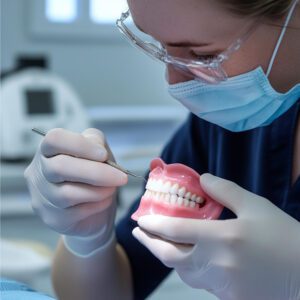
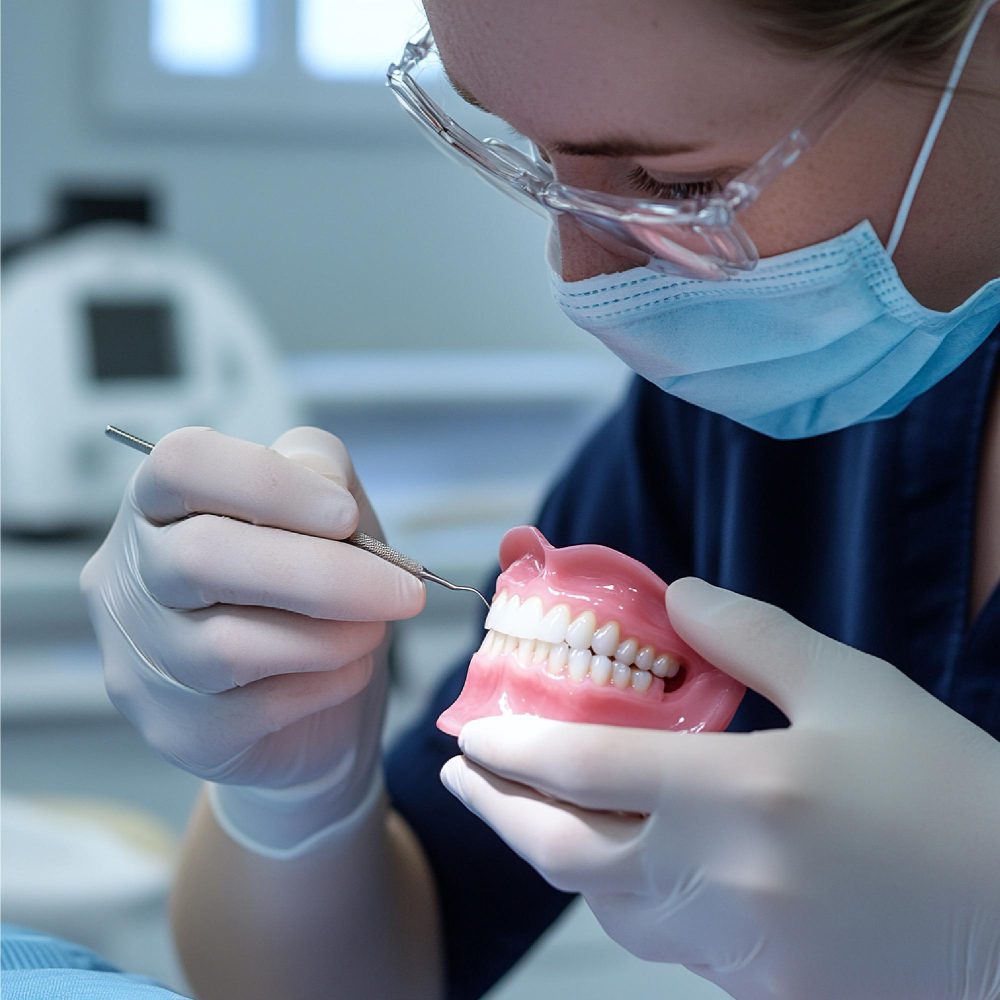
Porcelain veneers are placed over several visits: examination and digital scan, conservative preparation with temporary veneers, laboratory fabrication, a try-in to check fit and colour, and final bonding with a bite check, usually across about 5 to 7 working days in Istanbul.
Cleveland Clinic notes that at home a lab can take a few weeks to make veneers; for travelling patients we plan the lab work around your stay. For a fuller schedule, see how many days veneers take in Istanbul, and for minimal-preparation ceramic options, our partner clinic's guide to no-prep veneers.
Want a day-by-day plan for your veneers?
Tell us how many teeth you would like to change and your travel dates. We will suggest a realistic schedule for composite or porcelain.
Plan my visit on WhatsAppHow many days do you need for veneers in Istanbul?
For veneers in Istanbul, composite cases often need about 1 to 2 days, while porcelain cases are usually planned over about 5 to 7 working days with 3 or 4 visits; full upper and lower makeovers or treatment needed first can extend the stay to about 7 to 10 days or two trips.
Cleveland Clinic and ADA MouthHealthy both say decay and gum disease must be treated before veneers, which can add days. An online review of your photos and X-rays flags this early. Our online dental consultation explains how it works. The NHS treatment abroad checklist also advises staying in the country long enough to recover before travelling home, so we always keep a buffer day.
Who should be careful with veneers?
People who clench or grind their teeth, have a deep overbite, or have untreated decay or gum disease should be careful with veneers, because ADA MouthHealthy notes these conditions can affect whether veneers are suitable and how long they last.
- Grinding and clenching: a night guard is often recommended; read about teeth grinding at night.
- Large fillings: a veneer may still be possible; see can veneers be placed on teeth with fillings?
Over-preparation is a real concern; see the risks of excessive tooth filing.
Watch: a smile makeover transformation at our Istanbul clinic
Smile makeover transformation at the Dr. Abdurrahman Ozturk Dental Clinic
This short reel follows a smile makeover at our clinic in Taksim, from the starting smile to the finished result. It shows how shape, length and shade are planned as one design rather than tooth by tooth. Every case is different, so the right material and number of teeth are decided after your examination.
How do you care for composite and porcelain veneers?
You care for composite and porcelain veneers much like natural teeth: brush twice a day with a non-abrasive fluoride toothpaste, clean between teeth daily, avoid biting hard objects and keep regular check-ups, because decay can still develop around a veneer's edges.
- Use a soft-bristled brush; Cleveland Clinic advises avoiding whitening products because they can scratch veneers.
- Avoid biting hard objects or fingernails; wear a mouthguard for sport.
- Limit coffee, tea and red wine, especially with composite; read do veneers stain from coffee and smoking?
Cleveland Clinic lists sensitivity to heat and cold as a possible downside, and ADA MouthHealthy notes it may take a few days to get used to a veneer. Our partner site also explains whether veneers cause bad breath.
What warning signs mean you should contact your dentist?
Contact your dentist if a veneer feels loose, chips or cracks, your bite feels high, sensitivity or pain does not settle after a few days, or the gums around a veneer bleed or swell; Cleveland Clinic advises calling your dentist right away if something does not feel right.
- A veneer that moves, lifts at the edge or comes off; keep it and contact us.
- Dark lines or staining along the margin.
- Pain when chewing or swelling in the gum.
At home, send us photos on WhatsApp; for urgent pain or swelling, also see a local dentist.
How does our clinic plan composite vs porcelain veneers?
At the Dr. Abdurrahman Ozturk Dental Clinic, we plan composite vs porcelain veneers with digital smile design and a mock-up, so you can see and approve the proposed shape before any enamel is changed and choose the material with full information.
- Online review of photos and X-rays before you travel.
- Examination of teeth, gums and bite.
- Digital smile design from photos and a 3D scan; read about digital smile design in Turkey.
- Mock-up: a trial smile you can judge in the mirror.
- Material decision: composite, porcelain or a mix, with honest pros and cons.
- Treatment and aftercare with remote follow-up.
Our sister clinic also shows how artificial intelligence can support veneer planning at AI dental veneers in Istanbul, and our partner clinic's dental treatment in Turkey step by step covers travel planning.
Key takeaways: composite vs porcelain veneers
- Composite veneers are sculpted directly on the tooth, often in 1 to 2 days, with little enamel removal and easy repair.
- Porcelain veneers are lab-made, resist stains and wear better, and usually need about 5 to 7 working days in Istanbul.
- Studies show high survival for porcelain over 10 years and moderately high survival for composite over shorter follow-up.
- Decay, gum disease and grinding must be addressed first and affect the choice.
- A mock-up lets you see the result before deciding.
Veneers in Taksim, Istanbul: why plan with our clinic?
The Dr. Abdurrahman Ozturk Dental Clinic in Taksim, Beyoğlu, plans your veneers before you arrive, explains each step in clear English, favours conservative preparation and keeps in touch on WhatsApp after you fly home.
Clinic location: Gümüşsuyu Mah., Mete Cad., Beyoğlu, Istanbul, a few minutes' walk from Taksim Square.
To see how a full makeover is planned, read our Hollywood smile guide for Istanbul, or our partner clinic's overview of veneers in Turkey. Results vary between individuals.
Related articles
How to choose the right veneer colour Are cosmetic dental veneers worth it? Cosmetic vs therapeutic veneers Choosing a clinic in Turkey for a Hollywood smile Comprehensive aesthetic dentistry in Istanbul A perfect smile in 7 days: what is realistic? Solutions for a gummy smileReady to choose your veneers in Istanbul?
Send your smile photos and travel dates. We will review your case and suggest composite, porcelain or a combination with a realistic plan.
Message us on WhatsApp Visit our websiteFrequently asked questions
What is the main difference between composite and porcelain veneers?
Composite veneers are made of tooth-coloured resin that the dentist sculpts directly on your teeth, usually in one or two visits. Porcelain veneers are thin ceramic shells made in a laboratory and bonded at a later visit.
Which veneers are better, composite or porcelain?
Neither is better for everyone. Porcelain is often chosen for larger changes in colour and shape and for stain resistance. Composite is often chosen for small chips, gaps and shape corrections with minimal preparation.
How long do composite veneers last compared with porcelain?
Studies report higher long-term survival for porcelain: one systematic review estimated 95.5% survival at 10 years. A meta-analysis of composite veneers found 88% survival over mean follow-up of about two to eight years.
How many days do I need in Istanbul for veneers?
Composite veneers often take about 1 to 2 days. Porcelain veneers are usually planned over about 5 to 7 working days with 3 or 4 visits. Larger cases can take about 7 to 10 days.
Do porcelain veneers need more tooth preparation than composite?
Usually yes. Porcelain veneers normally require removing a small amount of enamel from the front and sides of the tooth so the shell fits. Composite veneers may need less enamel removal, and sometimes very little.
Can a chipped veneer be repaired?
A chipped composite veneer can often be repaired by adding and polishing fresh composite. A cracked or fractured porcelain veneer is usually replaced with a new one.
Do composite veneers stain from coffee?
Composite is less resistant to staining than porcelain, so coffee, tea, red wine and smoking can dull or discolour it over time. Porcelain is more stain-resistant.
Can I get veneers if I grind my teeth?
Grinding and clenching put extra force on veneers and can cause chips or debonding. ADA MouthHealthy notes veneers may not suit people who clench or grind or have a deep overbite.
Conclusion
The composite vs porcelain veneers decision comes down to your goals, your teeth and your time in Istanbul. Composite is often quicker, more conservative and easier to repair; porcelain is more stain-resistant and suits bigger changes but needs a working week. Start with an online assessment, see your new smile as a mock-up, and choose with your dentist rather than with a filter. The team at the Dr. Abdurrahman Ozturk Dental Clinic in Taksim is happy to review your case.
Sources
- Cleveland Clinic. Veneers. clevelandclinic.org
- American Dental Association – MouthHealthy. Veneers. mouthhealthy.org
- NHS. Dental treatments. nhs.uk
- NHS. Treatment abroad checklist. nhs.uk
- Alenezi A, Alsweed M, Alsidrani S, Chrcanovic BR. Long-Term Survival and Complication Rates of Porcelain Laminate Veneers in Clinical Studies: A Systematic Review. J Clin Med. 2021. pubmed.ncbi.nlm.nih.gov
- Lim TW, Tan SK, Li KY, Burrow MF. Survival and Complication Rates of Resin Composite Laminate Veneers: A Systematic Review and Meta-Analysis. J Evid Based Dent Pract. 2023. pubmed.ncbi.nlm.nih.gov