Zirconia Crowns in Turkey: How Many Days and Visits Do You Need?
If you are considering zirconia crowns in Turkey, the first practical question is usually time: how long to stay, how many appointments you need, and what happens after you fly home.
This guide follows each step in Istanbul, from digital scan and temporary crowns to try-in, cementation and remote follow-up.
At Dr. Abdurrahman Ozturk Dental Clinic, your stay is planned around your teeth, and your dentist confirms the schedule.
Quick answer: how many days do zirconia crowns in Turkey take?
Zirconia crowns in Turkey are usually planned over about 5 to 7 working days with 3 or 4 clinic visits: examination and digital scan, tooth preparation with temporary crowns, a try-in, and final cementation with a bite check. A full-mouth case, root canals or gum treatment can extend the stay to 7 to 10 days or two trips.
These are typical ranges, not fixed promises; the number of teeth and the health of your gums and roots matter.
Important medical note
This article is general information and does not replace an examination. A crown requires reshaping the tooth, which cannot be undone. Decay, infection and gum disease must be treated first, and only a licensed dentist can decide whether a crown is right for you.
How many days would your crowns take?
Send us photos of your teeth and, if you have one, a recent X-ray. Our team will explain the likely number of visits before you book your flights.
Ask on WhatsAppWhat is a zirconia crown, and when is it recommended?
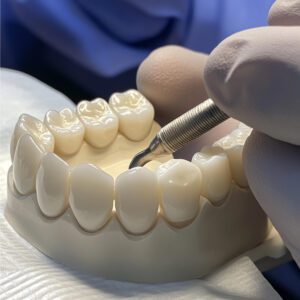
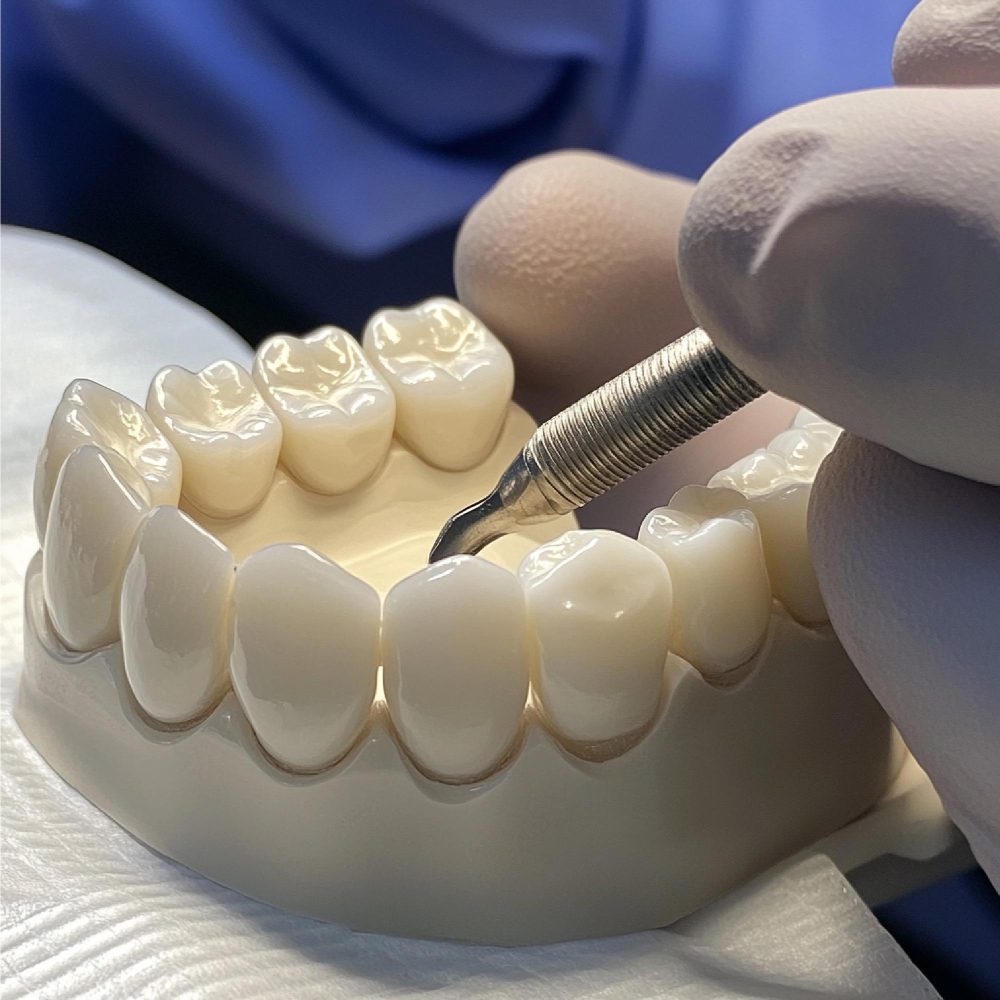
A zirconia crown is a tooth-shaped cap made from zirconium dioxide, a strong ceramic, that covers the entire visible part of a tooth to protect it, restore its shape and improve its appearance. It is often recommended for weakened, broken, heavily filled or root-canal-treated teeth.
The NHS describes a crown as a type of cap that completely covers a real tooth, fitted where a tooth has broken, decayed or been damaged, or simply to make it look better. ADA MouthHealthy adds that a crown can strengthen a tooth with a large filling when there is not enough tooth left to hold the filling, protect a weak tooth from breaking, anchor a bridge or cover a dental implant.
Cleveland Clinic describes zirconia crowns as extremely durable and able to withstand heavier forces than other types of ceramic crowns, and notes that they are gentler on opposing teeth. That makes zirconia a common choice for back teeth and for metal-free restorations.
Weakened teeth
Teeth with large old fillings, cracks or worn edges that may not hold another filling.
After a root canal
A tooth treated with a root canal is often covered by a crown to protect it from breaking.
Appearance
Badly discoloured or misshapen teeth, or old metal-ceramic crowns with a dark edge you want replaced.
Veneer or crown? Our partner clinic compares them in veneers vs zirconia crowns. If an old crown already shows a dark edge, read why a dental crown turns black at the gum line.
What happens before you travel? The online assessment
Before you travel, the dentist reviews your photos, any recent X-rays and your goals online, so you arrive knowing roughly how many visits and days you need, and problems such as infection or gum disease are flagged early.
You will usually be asked for:
- Clear photos of your smile and teeth in daylight: front, both sides and the biting surfaces if possible.
- A recent panoramic X-ray, if you have one.
- Details of old fillings, crowns, root canals, missing teeth and any grinding or clenching.
Read how online dental consultation (teledentistry) works; the final plan follows the examination in Istanbul.
Day 1 of zirconia crowns in Turkey: examination and digital scan
On day 1 the dentist examines your teeth and gums, takes X-rays or a 3D scan when needed, records your bite and scans your teeth digitally to plan the number of crowns and the shade.
A tooth that looks fine in a photo may hide decay or a root infection that must be treated first. When roots or bone need a closer look, a CBCT dental scan in Istanbul can give the dentist a three-dimensional view.
Examination and X-rays
Checking for decay, root infection, gum disease, cracks and the condition of old crowns.
Digital scan
An intraoral scanner records your teeth in 3D. MedlinePlus notes that impressions can be taken either with impression material or by digital scan.
Smile and bite planning
For front teeth, shape and shade are planned with you; see how digital smile design and laser dentistry support this step.
How are teeth prepared, and what are temporary crowns for?
At the preparation visit the tooth is numbed, old fillings and decay are removed, and the tooth is reshaped so the crown can fit over it; a final scan goes to the lab and you leave with temporary crowns that protect the teeth while the zirconia crowns are made.
MedlinePlus describes this visit: the dentist numbs the tooth and the gums around it, removes old fillings or decay, reshapes the tooth and takes an impression or digital scan for the lab, and you go home with a temporary crown.
Living with temporary crowns
Temporary crowns are usually resin or acrylic and less strong. MedlinePlus advises avoiding sticky foods, chewing on the other side, and sliding floss out sideways rather than lifting it up.
Try-in and cementation: how are zirconia crowns fitted?
At the try-in, the dentist places the crowns without cement to check fit, contacts, bite and colour; once you and the dentist are happy, the temporaries are removed, the teeth are cleaned and the zirconia crowns are cemented, then the bite is adjusted.
Cleveland Clinic describes the final visit in the same way: the temporary crown is removed, the fit, shape and colour of the new crown are checked, and it is bonded to the tooth with a strong dental cement. A short bite check a day later is often added before your flight.
Day-by-day timeline for zirconia crowns in Istanbul
A typical schedule for zirconia crowns in Istanbul spreads 3 or 4 visits across about 5 to 7 working days, with free days while the lab works. This is an example only; your own timeline is confirmed after the examination.
Want a personal timeline for your crowns?
Tell us how many teeth you want to treat and your preferred travel dates.
Plan my visit on WhatsAppSingle crowns vs full-mouth zirconia: how does the case size change your stay?
The number of teeth changes the stay more than the material: one to a few single crowns often fit into about 5 to 7 working days, while a full-mouth case with many crowns, bite changes or extra treatment usually needs 7 to 10 days, and sometimes two trips.
| Case | Typical visits | Typical stay in Istanbul | Key points |
|---|---|---|---|
| 1 to 4 single crowns | 3 to 4 | About 5 to 7 working days | Front teeth need especially careful shade matching |
| Full-mouth zirconia crowns | 4 to 5 | About 7 to 10 days | More preparation, bite planning and adjustment visits |
| Crowns needing root canals or gum treatment | 4 or more | About 7 to 10 days, or two trips | Infection and gum health come first |
Same-day technology has limits. A Mayo Clinic report on CAD/CAM crowns describes a three- to four-hour appointment, and notes that colour matching for front teeth is still best done by a skilled lab technician, and that the traditional method is still recommended when more than three teeth need crowns. Read more about same-day crowns and bridges in Istanbul.
If root canal treatment is needed before a crown, our partner clinic explains whether root canal treatment in Turkey is painful. If you also have missing teeth, an implant may be part of the plan; see this overview of dental implants in Turkey in 2026, as implant treatment follows a different, longer timeline.
Who is a good candidate for zirconia crowns in Turkey?
Good candidates for zirconia crowns in Turkey have teeth that are weakened, broken, heavily filled, root-canal treated or badly discoloured, with healthy gums and roots or problems that can be treated first; healthy teeth that only need a colour change are usually better served by more conservative options.
Often suitable
Large fillings, cracked or broken teeth, worn teeth, root-canal-treated teeth and old crowns that need replacing.
Treat first
Active decay, root infection and gum disease. These add days but protect the result. Receding gums are assessed too; read about gum recession causes and treatment.
Needs caution
Heavy grinding or clenching. Cleveland Clinic suggests asking about a custom mouth guard if you grind. Read about teeth grinding at night (bruxism).
What should you prepare before your trip?
Before your trip, prepare your dental history, recent X-rays, a list of medicines and a flexible schedule with at least one spare day, so a small adjustment never clashes with your flight.
- Book your return flight only after the dentist confirms your timeline.
- Avoid flying on the same day as cementation if you can.
The NHS treatment abroad checklist advises checking the team's qualifications, avoiding pressure to decide quickly, agreeing in advance how aftercare will work, and staying long enough before travelling home.
Aftercare: how do you look after zirconia crowns?
Look after zirconia crowns like natural teeth: brush twice a day with fluoride toothpaste, clean between your teeth every day, avoid biting very hard objects and keep regular check-ups, because the tooth under the crown can still decay at the edges.
Cleveland Clinic says some sensitivity to heat and cold for a couple of weeks is normal, and gum soreness usually fades within a few days.
- Avoid chewing ice, hard sweets and very hard nuts, which Cleveland Clinic lists among foods to avoid.
- Wear a night guard if your dentist recommends one for grinding.
Warning signs after crowns: when to contact your dentist
Contact your dentist if you notice any of the following, which Cleveland Clinic and MedlinePlus list as reasons to call:
- A crown or temporary crown that feels loose or comes off.
- A bite that feels wrong or high when you close your teeth.
- Pain or sensitivity that gets worse instead of better, or is not relieved by pain relievers.
- Swelling that increases, or a chip, crack or sharp edge on a crown.
Discomfort under a new crown has several possible causes; read pain under a dental crown: causes and what to do.
Remote follow-up: what happens after you fly home?
After you fly home, follow-up continues remotely: you send photos or a short video if anything feels wrong, the dentist advises you on the next step, and you keep regular check-ups with a local dentist, who can also see you if urgent care is needed.
NHS England's policy explains that patients should first contact the provider who carried out private treatment, who is expected to handle post-treatment problems within a reasonable timeframe. NHS services will stabilise sudden pain or infection but would not usually replace self-funded treatment, so agree on follow-up before you travel.
Ask for written details of your treatment. On lifespan, Cleveland Clinic gives an average of 5 to 15 years, and MedlinePlus says most crowns last at least 5 years and some 15 to 20 years, depending largely on care and regular check-ups.
Key takeaways on zirconia crowns in Turkey
- Zirconia crowns in Turkey are usually planned over about 5 to 7 working days with 3 or 4 visits.
- Full-mouth cases, root canals or gum treatment can extend the stay to 7 to 10 days or two trips.
- Temporary crowns protect prepared teeth while the lab makes the final crowns.
- A try-in before cementation and a bite check before the flight help avoid problems later.
Planning zirconia crowns in Istanbul with our clinic
At Dr. Abdurrahman Ozturk Dental Clinic, planning starts with an online review of your photos and X-rays. In Istanbul, teeth are prepared only as much as the crown requires, and every case includes a try-in before cementation.
We explain each step in clear English and stay in contact by WhatsApp after you go home. Learn more about dental veneers and crowns at our clinic. To see how artificial intelligence is being used in dental planning, visit our sister clinic AIDent Clinic in Istanbul. Results vary from person to person, and the dentist recommends the most suitable option after the examination.
Related articles
Veneers in Istanbul: how many days and visits do you need? A perfect smile in 7 days: what is realistic? Hollywood smile in Turkey: the Istanbul guide Cosmetic vs therapeutic veneers How to choose the right veneers color Choosing a dental clinic in Turkey How many days do you need for dental implants in Istanbul? Follow-up care after dental treatment in IstanbulReady to plan your zirconia crowns in Istanbul?
Send us your photos, any X-rays and your travel dates, and we will help arrange your examination in Istanbul.
Contact us on WhatsApp Visit our websiteFrequently asked questions
How many days do I need in Istanbul for zirconia crowns?
Most zirconia crown cases are planned over about 5 to 7 working days with 3 or 4 visits. Full-mouth cases or teeth needing root canals or gum treatment may take 7 to 10 days or two trips. Your dentist confirms the timeline after the examination.
Can I get zirconia crowns in one day?
A single crown on a suitable back tooth can sometimes be designed and milled the same day. Several crowns, front teeth that need careful shade matching, and full-mouth cases are usually made in a lab over several visits.
Will I have temporary crowns while I wait?
Usually yes. After preparation, temporary crowns protect your teeth while the lab makes the zirconia crowns. Avoid sticky and very hard foods and chew carefully until the final crowns are fitted.
Is getting a zirconia crown painful?
The tooth and gums are numbed during preparation, so the procedure itself should not hurt. Some sensitivity to heat and cold or gum soreness afterwards is common and usually settles within days to a couple of weeks.
Can I fly home right after my crowns are cemented?
Most people return to normal activities right away, but it is wise to keep one spare day after cementation so the dentist can check and adjust your bite before you travel.
What happens if a crown feels loose after I return home?
Contact the clinic with photos as soon as possible and keep the crown safe if it comes off. The dentist will advise you, and a local dentist can see you if urgent care is needed.
Who should not get zirconia crowns?
Teeth with active decay, root infection or gum disease need treatment first, and healthy teeth that only need a colour change are often better treated more conservatively. Heavy grinders may need a night guard. Your dentist decides after an examination.
How long do zirconia crowns last?
Cleveland Clinic gives an average crown lifespan of 5 to 15 years, and MedlinePlus says some crowns last 15 to 20 years. Good oral hygiene and regular check-ups make a big difference.
Conclusion
Planning zirconia crowns in Turkey is much easier when you know what each visit is for. A typical case takes about 5 to 7 working days and 3 or 4 appointments: examination and digital scan, careful preparation with temporary crowns, a try-in and final cementation with a bite check. Choose a clinic that plans honestly and stays in touch after you fly home. If you are considering zirconia crowns, the team at Dr. Abdurrahman Ozturk Dental Clinic would be glad to review your teeth and suggest a realistic plan.
Sources & References
- Cleveland Clinic. Dental Crowns. clevelandclinic.org
- MedlinePlus Medical Encyclopedia. Dental crowns. medlineplus.gov
- American Dental Association – MouthHealthy. Crowns. mouthhealthy.org
- NHS. Dental treatments. nhs.uk
- Mayo Clinic News Network. Dental Crowns: Measured, Made and Placed During One Appointment. mayoclinic.org
- NHS. Treatment Abroad Checklist. nhs.uk
- NHS England. Avoidance of Doubt: Clinical Policy for Self-Funded Dental Treatment Requiring NHS Intervention. england.nhs.uk